
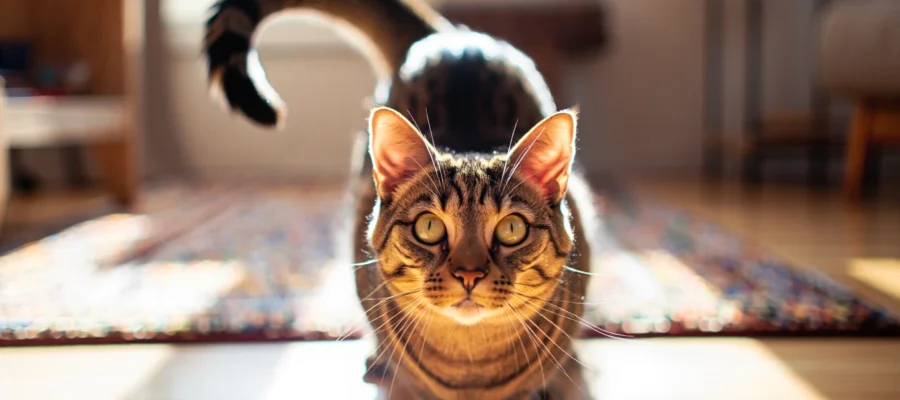
Last night, Whisky and Plume turned my living room into a private concert. Their tails were held high, twitching and swaying like a conductor’s baton. Watching them made me understand, once again, why cats use that favorite little appendage so often: it is one of their most expressive tools.
Do you watch your cat flick its tail and wonder what it is trying to tell you? I do too, and over time I have learned that tail movements reveal a surprising amount about a cat’s mood, level of excitement, and need for space. With three whiskered accomplices at home, I have had plenty of opportunities to learn the difference between a relaxed tail, a hunting tail, and a tail that says, very clearly, “not now.”
If you want to decode your cat’s hidden messages, the tail is one of the best places to start.
Why do cats wag their tails? The mystery explained
A cat that moves its tail is not being random. It is communicating. Much like people gesturing while talking on the phone, cats use body language to express emotions that they cannot put into words. Their tail often acts as an emotional barometer, giving clues about what they feel and what they are about to do next.
Unlike dogs, whose tail wagging is often associated with friendliness or excitement, cats use tail movement in a much more nuanced way. A swish, a twitch, or a puffed-up tail can signal very different things depending on the situation. Paying attention to those details can help you understand your cat instead of misreading its behavior.
I noticed this with Caramel one morning. He had started lashing his tail back and forth, and at first I thought he was irritated. But then I looked more closely: his pupils were enlarged, his ears were forward, and his whole body was fixed on the pigeons outside. He was not upset at all. He was in hunting mode.
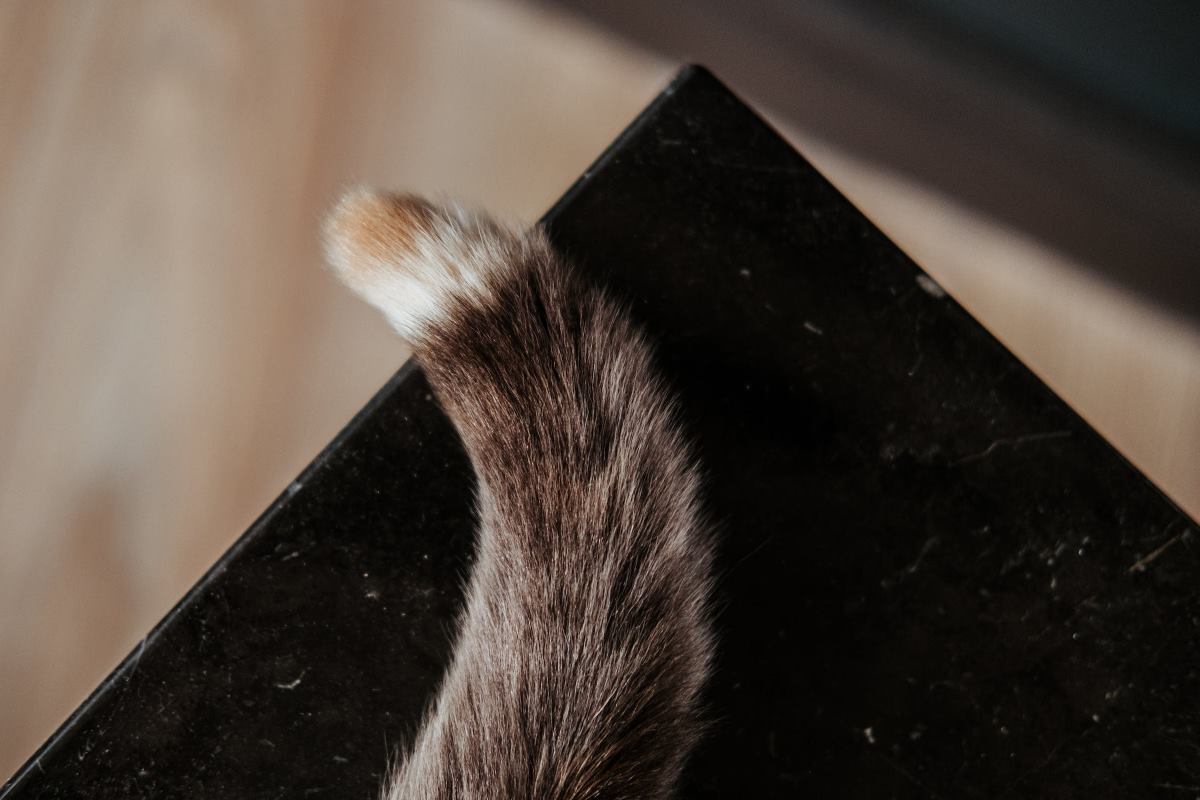
The 5 tail movements that speak the loudest
Tail held high and vibrating: “I’m thrilled to see you”
This is one of the clearest signs of a confident, happy cat. When a cat approaches with its tail raised and lightly vibrating, it is often greeting you warmly. The motion may be subtle, but the message is easy to understand: your cat feels safe and pleased to see you.
My tested tip: when Plume does this, I crouch down to her level and let her come to me. The result is usually immediate: purring, rubbing, and a very affectionate reunion.
Quick, jerky tail movements: “I’m thinking”
Whisky does this when he is weighing his options, especially before pouncing on a toy or deciding which hiding place to choose. Short, brisk movements often mean that a cat is focused and mentally engaged. It may be excited, unsure, or deeply concentrated on something in front of it.
If you see this pattern, it is usually best not to interrupt. Your cat is processing the situation and preparing its next move.
Puffed-up, bottle-brush tail: “Danger”
The first time I saw Caramel with a tail like that, I honestly panicked. His tail looked enormous, his back arched, and he seemed ready for battle. In reality, the “enemy” was my robot vacuum. Once the noisy object moved away, the tail slowly returned to normal.
A puffed tail is a classic sign of alarm. It usually means your cat feels threatened, startled, or overwhelmed. The best response is to give it space and remove whatever is causing the stress if possible.
Slow, flowing tail movement: “I’m relaxed, but alert”
This smoother, slower motion often appears when a cat is comfortable but still paying attention to what is happening around it. It is a calm, observant state rather than a sleepy one. My three cats do this most often when they are sitting by the window, watching birds, leaves, or anything that moves in the garden.
It is a good reminder that a cat can be peaceful and vigilant at the same time.
Tail tucked close to the body: “Leave me alone”
When a cat keeps its tail hidden or pressed tightly against its body, it is usually asking for distance. This posture can indicate discomfort, fear, or shyness. With Plume, who is more reserved than the others, I learned that respecting this signal matters just as much as recognizing excitement or affection.
If a cat is withdrawing its tail, that is not the moment to insist on cuddles or direct contact. Giving it a little room is often the kindest response.
Did you know? A cat has 23 vertebrae in its tail, which represents about 10% of all its bones. This finely tuned structure helps it balance, move, and communicate a wide range of emotions.
How to communicate better with your cat
After months of observation, and a few scratches earned from misunderstanding the signs, I have found a few simple habits that really help.
The emotional mirror: match your energy to your cat’s. If the tail is loose and relaxed, move calmly and gently. If it is twitching or puffed up, keep your distance and let the cat settle first.
The 3-second rule: watch the tail for a few seconds before reaching out. That tiny pause can prevent a great deal of confusion and helps you avoid touching a cat that is not in the mood.
My morning ritual: every day, I check my cats’ tail language before offering affection. It is a simple habit, but it has made our interactions much smoother. Fewer misunderstandings, fewer startled reactions, and far more purring.
It also helps to remember that tail language should never be read in isolation. Ears, eyes, whiskers, posture, and even the position of the body all add context. A tail flicking quickly with flattened ears means something very different from a tail twitching while the cat is calmly watching birds. The whole body tells the story.
Turning everyday life into a feline conversation
Once you start paying attention, you will notice that your cat is speaking to you all the time. Not with words, of course, but with posture, movement, and especially the tail. A cat that greets you with a raised tail is welcoming you. A cat that swishes its tail sharply may be overstimulated or frustrated. A cat that hides its tail may need quiet and reassurance.
Try observing your cat for a full day and notice how often the tail changes depending on what is happening around it. Feeding time, playtime, a loud noise, a visitor, or a nap in a sunny spot can all trigger different signals. You may be surprised by how much information is hidden in such a small movement.
As my veterinarian likes to say, understanding a cat’s tail is one of the best ways to understand the cat itself. Once you learn to read those signals, you can respond more appropriately, build trust, and make daily life calmer for both of you.
So the next time your cat flicks, sways, or fluffs up its tail, pause and take a closer look. It might be telling you exactly how it feels.
latest posts published

Pregnant Dog: How to Prepare for the Arrival of the Puppies?

Death and Inheritance Rights: Who Inherits Your Pet? What You Need to Know

Senior Dog Kibble: At What Age Should You Switch?

Which Dog Breeds Don’t Shed Hair?

Bringing Your Dog or Cat to the Casino: Is It Really Possible?

What Are the Most Beautiful Cat Breeds?

Why Does My Dog Close Its Eyes When I Pet Its Head?
How to Clean Your Cat’s Ears Without Stress

Sterilizing My Cat: The Real Pros and Cons