
Rabbits are increasingly popular household pets, and for good reason: they are affectionate, curious, and full of personality. But like any companion animal, a rabbit needs more than food and a quiet corner of the home. It needs movement, stimulation, and regular interaction with its owner and surroundings. That is why planned outings, whether occasional or daily, can be a valuable part of a rabbit’s routine. A properly fitted harness is designed for that purpose, making walks safer, calmer, and more comfortable for both the animal and its owner.
Why use a harness to walk your rabbit?
There are two main options for walking a rabbit: a harness or a collar. Although a collar may seem easier to put on, it is not a good choice for rabbits. These animals are agile and can slip out of a collar with little effort. Tightening it enough to prevent that would create a different problem: discomfort, choking risk, and possible injury if the rabbit pulls away.
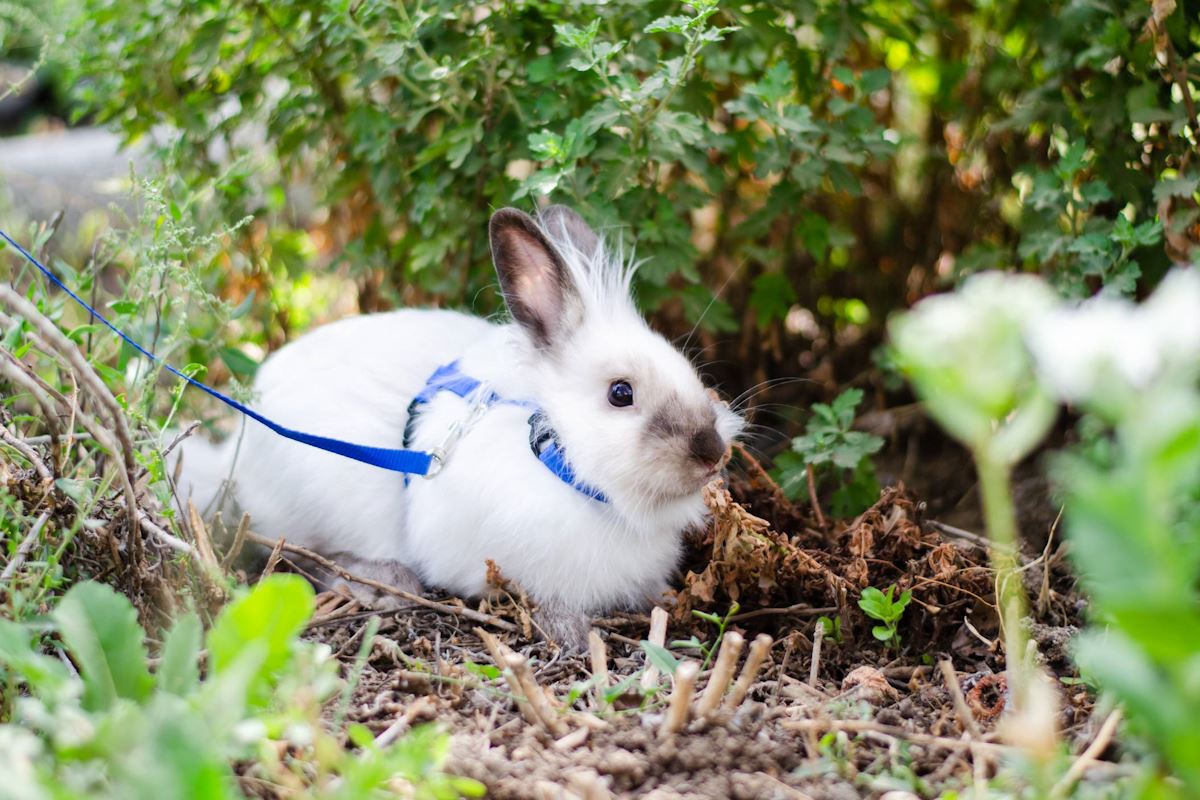
A rabbit harness is the better solution because it gives the animal freedom of movement without putting pressure on the neck. It is designed to fit the rabbit’s body more naturally and to allow the animal to move, explore, and even pause without feeling constrained. Once attached to a leash, the harness makes it possible to enjoy a walk indoors or outdoors while keeping the rabbit under control.
Unlike a collar, a harness wraps around the body. It usually includes one strap across the chest and another around the belly, which helps distribute tension more evenly if the rabbit pulls. This makes it a more comfortable and safer accessory. As explained by mon-lapinnain.com, it allows a rabbit to run and jump freely without getting hurt.
How to choose the right harness for your rabbit
Choosing a rabbit harness starts with taking the right measurements. Measure your rabbit’s neck and the circumference of its belly just behind the front legs. Whenever possible, choose an adjustable model that can be fitted both around the chest and the stomach. The harness should never be too tight or too loose. A simple rule of thumb is that you should be able to slip one finger between the harness and your rabbit’s body.
Material matters as well. Many manufacturers offer harnesses with fleece or breathable fabric lining that covers the animal more comfortably and helps reduce rubbing. This is especially important for a sensitive animal with delicate skin and fur. A good harness should also be easy to put on and remove, because a complicated design can create stress before the walk even begins.
Leash length is another point to consider. In general, it should be roughly comparable to the length of a dog leash. That gives the rabbit enough room to move naturally without forcing it to walk too close to your pace at every step.
Practical advice for walking your rabbit in a harness
If you plan to walk your rabbit in a park, choose a quiet area with as little noise and movement as possible. Avoid approaching dogs, since even calm dogs can be frightening to a rabbit. If you use an outdoor enclosure, make sure it is well shaded so the animal does not overheat.
When taking a rabbit into the garden, it is also wise to mow the grass first. This helps reduce an excessive intake of protein from very rich grass and makes the space more comfortable to move around in. Remove any plants that may be harmful or toxic to rabbits, including ivy, honeysuckle, tulips, and oleander.
After that, inspect the entire area for anything that could injure the animal, such as wooden boards, sharp points, or loose debris. The space should be securely fenced and clearly bounded. It must not be accessible to dangerous animals, including dogs and cats.
Rabbits need time to get used to a harness, so the adaptation phase should not be rushed. A useful first step is to place the harness in the rabbit’s cage so it can become familiar with its scent. Before putting it on, calm the rabbit by gently holding its front paws close to your body with one hand while supporting its chest with the other. Once the rabbit is relaxed, place the harness on its back and hold it in position while fastening the straps on each side. The process should be slow and reassuring so the animal does not associate the harness with stress.
With patience, the right fit, and a safe environment, a harness can become a practical way to let a rabbit explore the world beyond its enclosure while staying protected and comfortable.
latest posts published

Death and Inheritance Rights: Who Inherits Your Pet? What You Need to Know

Senior Dog Kibble: At What Age Should You Switch?

Which Dog Breeds Don’t Shed Hair?

Bringing Your Dog or Cat to the Casino: Is It Really Possible?

What Are the Most Beautiful Cat Breeds?

Why Does My Dog Close Its Eyes When I Pet Its Head?
How to Clean Your Cat’s Ears Without Stress

Sterilizing My Cat: The Real Pros and Cons

Is a Croissant Safe for Your Dog?