
If you live with a cat, you already know that food and water can be surprisingly personal matters. Some cats refuse certain textures, others will only drink from a sink or running tap, and many are picky about brand, temperature, or the type of bowl they use. One behavior, however, seems especially common: tipping over the food or water dish. It can be frustrating, messy, and a little baffling, but there are usually understandable reasons behind it.
Why do cats tip over their bowls?
There is no single explanation, because cats often act this way for a mix of practical and instinctive reasons. One possibility is very simple: your cat is trying to tell you that the bowl is empty. Cats cannot ask for more food or water in words, so they use behavior to get your attention. If tipping the bowl has become more frequent, it may be because your cat is reaching the end of its meal or water supply more often than before. In that case, the solution may be as simple as adjusting feeding times, portion sizes, or how often the water is refreshed.
Another common reason is discomfort. A cat’s whiskers are highly sensitive and play an important role in helping it gauge space, movement, and nearby objects. If a bowl is too deep, too narrow, or positioned in a way that presses against the whiskers, the cat may find it unpleasant to eat or drink from it. Some cats respond by pawing at the bowl, pushing it around, or knocking it over in an attempt to make it feel less restrictive. For these cats, the issue is not the food itself, but the design of the dish.
Cats may also tip over their bowls as part of territorial behavior. When a cat moves, pushes, or overturns an object, it can leave scent behind and reinforce its presence in that space. In a home with multiple pets, or in a home where something has recently changed, this behavior may become more noticeable. A new animal, a change in routine, or even a rearranged room can make a cat more alert and more likely to act out around its feeding area.
What should you do if your cat keeps knocking over its bowl?
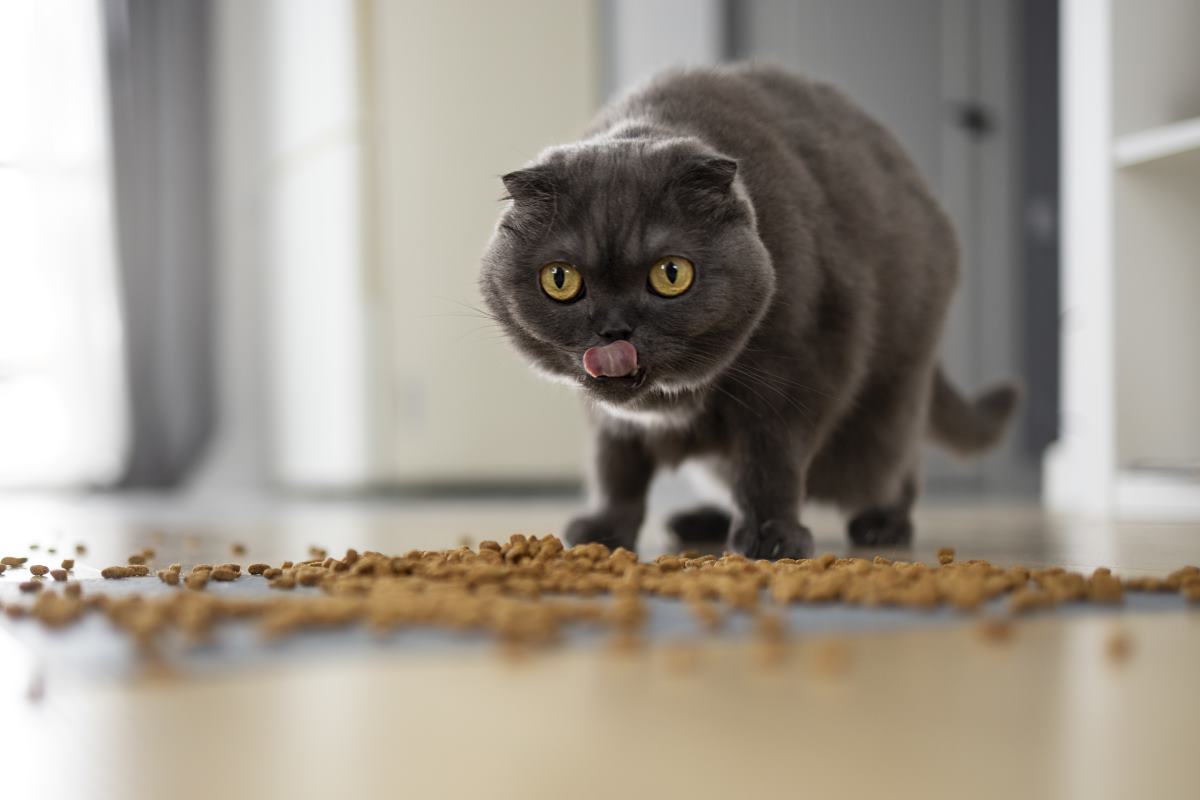
If the bowl contains food, start by cleaning the area as quickly as possible. Use a paper towel or cloth to remove as much of the spilled food as you can. Then wash the spot with warm water and dish soap, gently scrubbing until the residue is gone. Rinse thoroughly afterward so no soap is left behind. If a stain remains, a carpet cleaner or white vinegar may help, depending on the surface.
Always test any cleaning product on a small, hidden area first. Some surfaces, especially carpets and upholstery, can be damaged or discolored by certain cleaners. A cautious approach is better than risking a larger stain or more expensive repair. With the right product and a little patience, most spills can be cleaned effectively.
Once the mess is under control, look at the cat’s behavior more closely. The first thing to try is moving the bowl to another location. Your cat may dislike the current placement because it is too noisy, too exposed, too close to a litter box, or simply inconvenient. Sometimes a quiet, stable corner makes all the difference.
If changing the location does not help, consider changing the bowl itself. Some cats prefer wider, shallower dishes that do not press against their whiskers. Others may do better with a heavier bowl that is harder to push around. An educational cat bowl, or a bowl designed to slow down eating, may also be useful if your cat tends to paw at the food rather than eat calmly.
You can also examine the food. Your cat may simply not like the current kibble or wet food. A change in flavor, texture, or brand can sometimes reduce this kind of behavior. If your cat only starts tipping the bowl after a food switch, the food itself may be the issue rather than the bowl or the location.
Understanding the pattern
The key is to observe when and how the behavior happens. Does your cat tip the bowl when it is empty, right after eating, or when another animal is nearby? Does it happen only with water, only with food, or with both? These details can help you identify whether the cause is hunger, discomfort, territory, or simple preference.
It is also worth paying attention to any changes at home. New pets, construction noise, visitors, a move, or a change in routine can all affect a cat’s sense of security. Even if the bowl tipping seems minor, it can be a signal that something in the environment is bothering your cat.
If the behavior continues or becomes more intense, a veterinarian can help rule out health issues or dietary problems. Cats sometimes communicate discomfort through unusual habits, and it is better to check than to assume the behavior is harmless.
Final thoughts
If your cat has started tipping over its bowl, the cause is often fairly ordinary: the dish may be empty, the shape may be uncomfortable, or the cat may be reacting to changes in its surroundings. By watching the pattern carefully and making a few practical adjustments, you can usually identify what is driving the behavior. If you are unsure, or if the habit appears suddenly, asking a veterinarian for advice is always the safest option.
latest posts published
Pregnant Dog: How to Prepare for the Arrival of the Puppies?

Death and Inheritance Rights: Who Inherits Your Pet? What You Need to Know
Senior Dog Kibble: At What Age Should You Switch?

Which Dog Breeds Don’t Shed Hair?

Bringing Your Dog or Cat to the Casino: Is It Really Possible?

What Are the Most Beautiful Cat Breeds?

Why Does My Dog Close Its Eyes When I Pet Its Head?
How to Clean Your Cat’s Ears Without Stress

Sterilizing My Cat: The Real Pros and Cons