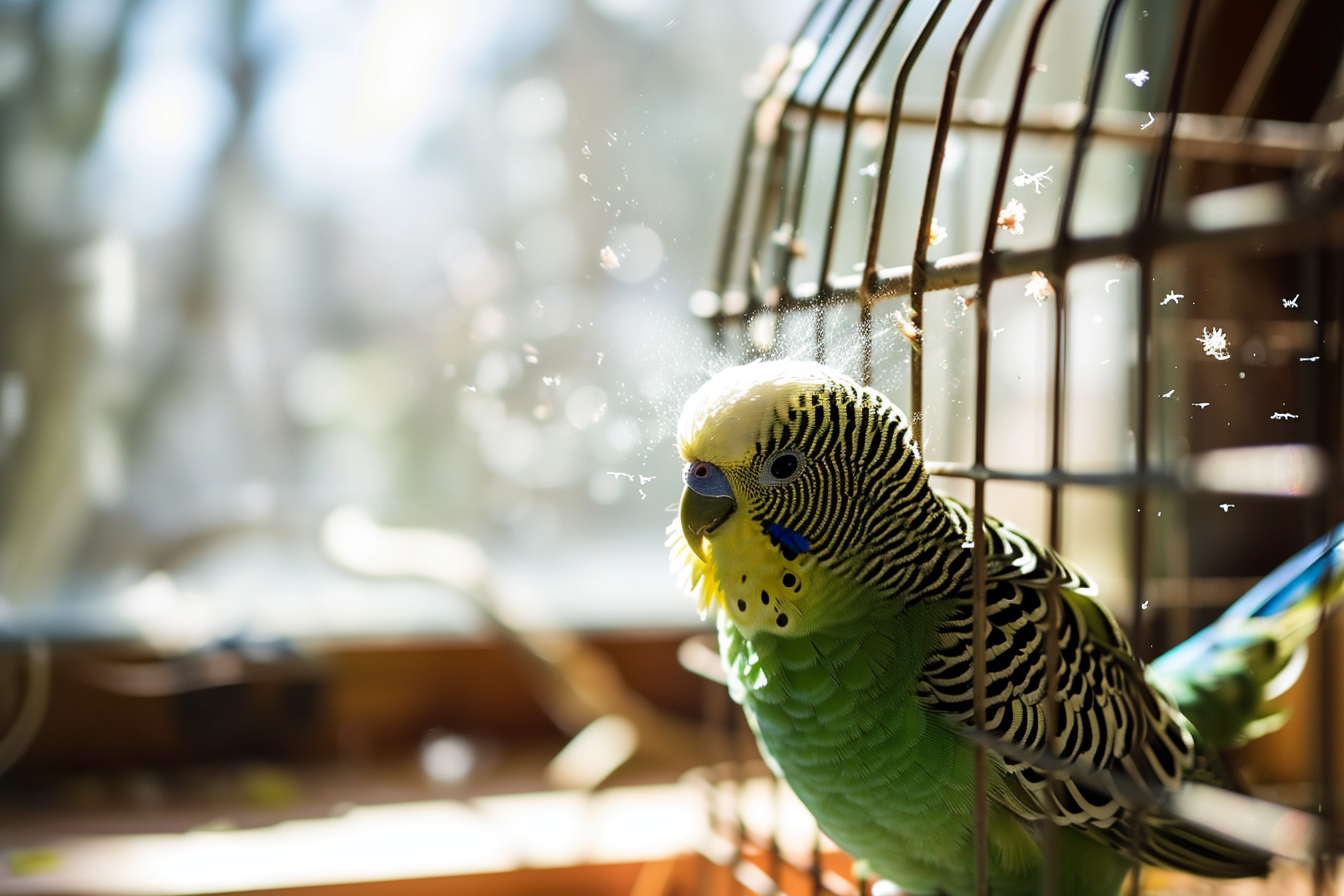
As pet owners, we quickly learn that birds can be full of personality, and some of their habits are easy to misunderstand. One of the more puzzling behaviours is a budgie repeatedly shaking its head. At first glance, it can look odd or even worrying, especially if the movement seems frequent or intense. In many cases, though, head shaking is simply part of normal budgie behaviour. The key is to pay attention to the context and any other signs your bird may be showing.
Possible causes of this behaviour
Budgies are highly expressive birds and use movement to communicate. A repeated head shake can mean different things depending on the situation, the bird’s mood, and whether any other symptoms are present.
In some cases, the bird is simply feeling lively, playful, or excited. Budgies are naturally active and social, and quick head movements may appear when they are alert, engaged, or reacting to something stimulating in their environment. If your bird is otherwise bright, eating well, and behaving normally, occasional head shaking is often nothing to worry about.
There are also practical reasons a budgie may shake its head. It may be trying to dislodge something irritating, such as dust, food particles, or a small object caught near the beak or nostrils. In some situations, parasites can also be a factor, although that is less common and usually comes with other signs of discomfort. Careful observation helps determine whether the movement is just a brief reflex or part of a broader problem.
When to be concerned
Although head shaking can be normal, repeated or forceful movements should not be ignored. The main question is whether the behaviour is happening on its own or alongside other symptoms. A bird that keeps shaking its head intensely may be trying to cope with irritation, pain, or an underlying health issue.
You should be more alert if the head shaking is accompanied by balance problems, feather loss, reduced appetite, or a noticeable change in behaviour. These signs can point to illness rather than a harmless habit. For example, an ear infection or sinusitis may cause discomfort that leads to repeated head movements. If the bird seems quieter than usual, is less interested in food, or is acting differently in other ways, it is best not to wait and see for too long.
Because birds often hide illness until it becomes more serious, even subtle changes can matter. What may look like a simple gesture can sometimes be an early clue that something is wrong. Watching for patterns is often more useful than reacting to a single isolated movement.
What to do if your budgie keeps shaking its head
If the behaviour is happening often, start by observing your bird closely. Note when the head shaking occurs, how frequently it happens, and whether it seems linked to eating, grooming, excitement, or a specific part of the day. These details can help you decide whether the behaviour looks routine or unusual.
It is also a good idea to check the bird’s environment. A clean cage, fresh food, clean water, and well-maintained perches and toys all help reduce the chance of irritation. Make sure the cage and accessories are free from visible dirt or anything that could cause discomfort. If you suspect parasites or another physical cause, a veterinarian can advise on the appropriate treatment rather than relying on guesswork.
Do not try to diagnose the problem yourself if the head shaking continues or becomes more pronounced. A qualified veterinarian can examine the bird, look for signs of infection or irritation, and determine whether the behaviour is harmless or linked to a medical condition. Early attention is especially important if the shaking is new, persistent, or accompanied by other worrying changes.
Understanding your budgie’s behaviour
Learning to read a budgie’s body language takes time, but it is part of what makes living with these birds so interesting. Head shaking may simply be a normal expression of excitement or energy, but it can also be a sign that something is irritating your bird or affecting its health. The difference usually becomes clearer when you look at the whole picture rather than one action in isolation.
By paying attention to your budgie’s habits, keeping its living space clean, and seeking veterinary advice when something seems off, you give your bird the best chance of staying healthy and comfortable. A little observation goes a long way when it comes to understanding these lively, intelligent companions.
latest posts published

Death and Inheritance Rights: Who Inherits Your Pet? What You Need to Know

Senior Dog Kibble: At What Age Should You Switch?

Which Dog Breeds Don’t Shed Hair?

Bringing Your Dog or Cat to the Casino: Is It Really Possible?

What Are the Most Beautiful Cat Breeds?

Why Does My Dog Close Its Eyes When I Pet Its Head?

How to Clean Your Cat’s Ears Without Stress

Sterilizing My Cat: The Real Pros and Cons

Is a Croissant Safe for Your Dog?