
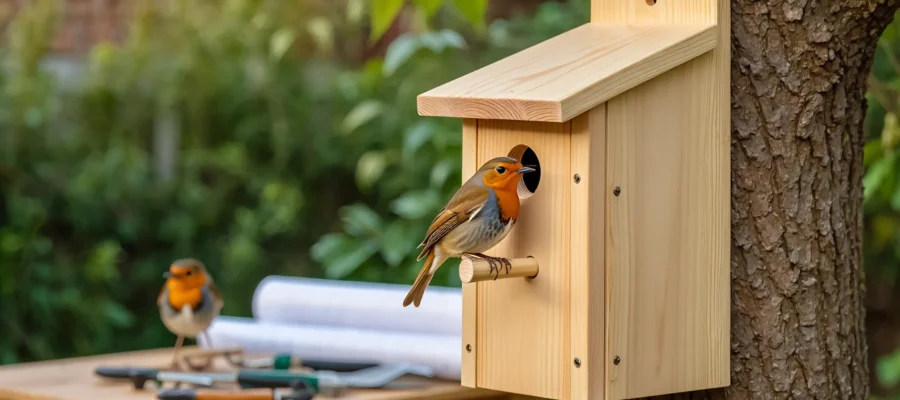
If you want to attract a robin to your garden, the first thing to know is that this bird does not use a nest box in the same way as tits or other cavity-nesting species. The robin is selective, cautious, and very sensitive to the shape of the shelter you offer. A well-designed box can make all the difference: it gives the bird a safe place to settle, nest, and raise its young while reducing stress and exposure to predators. The key is not just to provide any shelter, but to provide the right one, with the right dimensions, opening, and placement.
Why robins are so particular
The robin (Erithacus rubecula) belongs to the group of semi-cavity nesters. In the wild, it tends to choose shallow natural shelters rather than deep enclosed cavities. It may nest in hollow tree stumps, cracks in old walls, piles of wood, or dense shrubs. Because of this, a standard nest box with a small round entrance is usually a poor match for its habits.
Robins also like quiet places with some cover nearby, but they still need a clear view of the surroundings. That balance matters: they want to feel protected without being trapped. Their territory is relatively small, around 0.5 hectare, so they often remain close to familiar areas where food, shelter, and water are easy to find.
The ideal dimensions for a robin nest box
Essential interior measurements
- Floor: at least 12 cm x 12 cm, with 15 cm x 15 cm being ideal
- Height: between 15 and 20 cm
- Opening: 32 mm wide across the full height of the front, or a semi-open front with a 50 mm opening extending across the full width
Why the shape matters
The entrance should never be a simple round hole. Robins are naturally drawn to elongated openings that resemble the narrow gaps and partial shelters they use in the wild. A front opening that is too conventional can discourage them from entering, while the correct shape can make the box feel much closer to a natural nesting site.
These dimensions also help limit competition. A box designed for a robin is not the same as one designed for a blue tit, and the difference is important. The opening and overall layout are meant to favour the robin while making the space less attractive to species that would otherwise compete for nesting sites.
The floor should be large enough to hold the nest itself, which is usually about 8 cm in diameter, while still leaving room for the adults to move comfortably. If the interior is too cramped, the birds may avoid the box altogether or abandon it if they feel too exposed and restricted.
Recommended materials and finishes
Choose untreated wood such as fir, spruce, or oak, with a thickness of 18 to 20 mm to provide good insulation. The inside should remain rough and natural so that nesting materials can grip properly. A smooth interior may look neat, but it is less practical for birds building a nest.
Small drainage holes, 2 to 3 mm in size, are useful at the bottom to let moisture escape. It is also a good idea to extend the roof slightly, by 3 to 4 cm, so rain is less likely to reach the entrance and soak the nest area. These simple details improve comfort and help the box last longer through the breeding season.
Common mistakes to avoid
A circular entrance hole: this is the most common mistake. A nest box made for tits will not suit a robin.
Dimensions that are too small: a box measuring only 10 cm x 10 cm is too cramped and is unlikely to be used.
An opening that is too large: a fully open front leaves the occupants too exposed to predators and bad weather.
A perch at the entrance: it is unnecessary for robins and can make it easier for predators to access the box.
In general, the most successful robin boxes are simple, discreet, and well protected. Overly decorative features rarely help and can even work against the bird’s natural instincts.
Where to install the nest box
Place the box at a height of 1.5 to 2 metres, ideally facing southeast. That position gives the robin morning sun while limiting the risk of overheating later in the day. A semi-shaded location is usually best, especially if it is near a hedge, shrub border, or other natural cover, but still offers a clear approach for the bird.
Robins also appreciate access to water and a garden rich in insects. If your outdoor space is managed naturally, without pesticides, you will increase the chances of the box being used. A quiet corner of the garden is often better than a busy, exposed area near constant movement.
How to improve your chances of occupation
Install the nest box at the end of winter, ideally in February or March, before the breeding season begins. Robins usually breed from April to July, and they may raise 2 to 3 broods per year. A well-made box can therefore be used more than once if the conditions remain suitable.
You can also place natural nesting materials nearby, such as moss, fine twigs, and dead leaves. Robins often gather these elements to build their nests, so making them easy to find can encourage a pair to settle. The goal is to create a space that feels natural, calm, and safe from the start.
Above all, consistency matters. A robin-friendly box is not about size alone, but about matching the bird’s instincts: a shallow shelter, a discreet opening, sturdy materials, and a location that offers both protection and visibility. When those elements come together, the chances of seeing a robin take up residence are much higher.
latest posts published

Dog Supplies: Essential Checklist Before Adoption (2026 Guide)
How to Understand Your Hamster’s Behavior

How to Feed an Unweaned Kitten –
Medium-Haired Cats: Breeds, Temperament, and Prices – Cat Breeds
When and How to Find an Emergency Veterinarian

Chocolate Labrador: This Secret Could Save Its Health

What Should I Do If My Dog Breaks a Leg?
The Modern Challenges Facing Farmers Today –

Healthy Dog: How to Spot the Key Warning Signs