

The purring fades little by little, and the food bowl stays untouched. Yet only yesterday, Moustache was demanding his morning cuddles as if nothing could ever change. When a cat suddenly behaves differently, it is normal to feel worried and to wonder whether this is just a temporary dip or something more serious.
If you are watching your cat closely and feeling that familiar knot in your stomach, you are not alone. After years of living with felines, many owners learn to notice the quiet signals that cats send when they are unwell or nearing the end of their lives.
Recognizing these signs can help you respond with calm, comfort, and good judgment. It is not about panicking; it is about understanding what your companion may need right now.
Food and drinking habits that should raise concern
Has your cat been ignoring the bowl for several days? That is not simply pickiness. A cat’s appetite is closely tied to overall health, and changes in eating are often one of the first warning signs.
A cat approaching the end of life often loses interest in food gradually. Smell can become weaker, and when the sense of smell fades, food becomes far less appealing. You may notice your cat sniffing the kibble and then walking away without taking a bite.
Hydration usually drops as well. An older or very weak cat may drink less from the usual water bowl. Some cats will wander toward unusual places, such as a dripping tap, but only manage tiny sips.
Personal note: When Luna, my Siamese cat, was nearing her final days, she would only accept slightly warmed wet food. A little warmth can sometimes help release the aroma and make food more tempting, even if only for a few mouthfuls.
These changes matter because eating and drinking less can quickly lead to more weakness. A cat that is already fragile may not have the energy to recover on its own, which is why persistent loss of appetite should never be ignored.
When behavior changes in front of you
Behavioral changes are often among the earliest clues that something is wrong. A cat that normally greets you at the door may suddenly remain curled up in a corner, uninterested in the usual routine.
Many cats begin seeking solitude. They hide under beds, behind curtains, or in closets—places they may rarely have used before. This retreat is part instinct and part self-protection. In the wild, cats hide weakness to avoid danger, and that instinct remains strong even in the safety of a home.
On the other hand, some cats become more affectionate instead of less. They may want to stay close, follow you from room to room, or ask for comfort more often than usual. Their meows may also change, sounding rougher, weaker, or more plaintive.
Grooming often declines as well. A cat that no longer has the energy to clean itself may start to look dull, greasy, or tangled. A messy coat does not always mean neglect; sometimes it is simply a sign that the body is too exhausted to maintain normal habits.
Physical signs worth watching closely
General weakness often becomes easier to see. Your cat may sleep much more than usual, and the positions they choose may seem unusual because they are trying to breathe or rest more comfortably.
Movement can slow down noticeably. A cat may hesitate before jumping, move carefully across the floor, or stop attempting familiar activities like climbing to a favorite shelf or window perch.
Breathing is another important area to observe. Shortness of breath after very little effort, or faster breathing while resting, can indicate significant discomfort or a serious decline in condition.
The eyes can also tell you a great deal. A once-alert gaze may look distant or less focused, and the pupils may stay enlarged even in bright light.
Did you know? Cats instinctively hide pain. In the wild, showing weakness can make an animal vulnerable to predators, which is why subtle changes are often the only clues available to us.
Other physical signs may include a loss of muscle tone, a colder body than usual, or an overall appearance of fading energy. None of these signs alone can confirm what is happening, but together they can point to a cat that needs careful attention and possibly urgent veterinary advice.
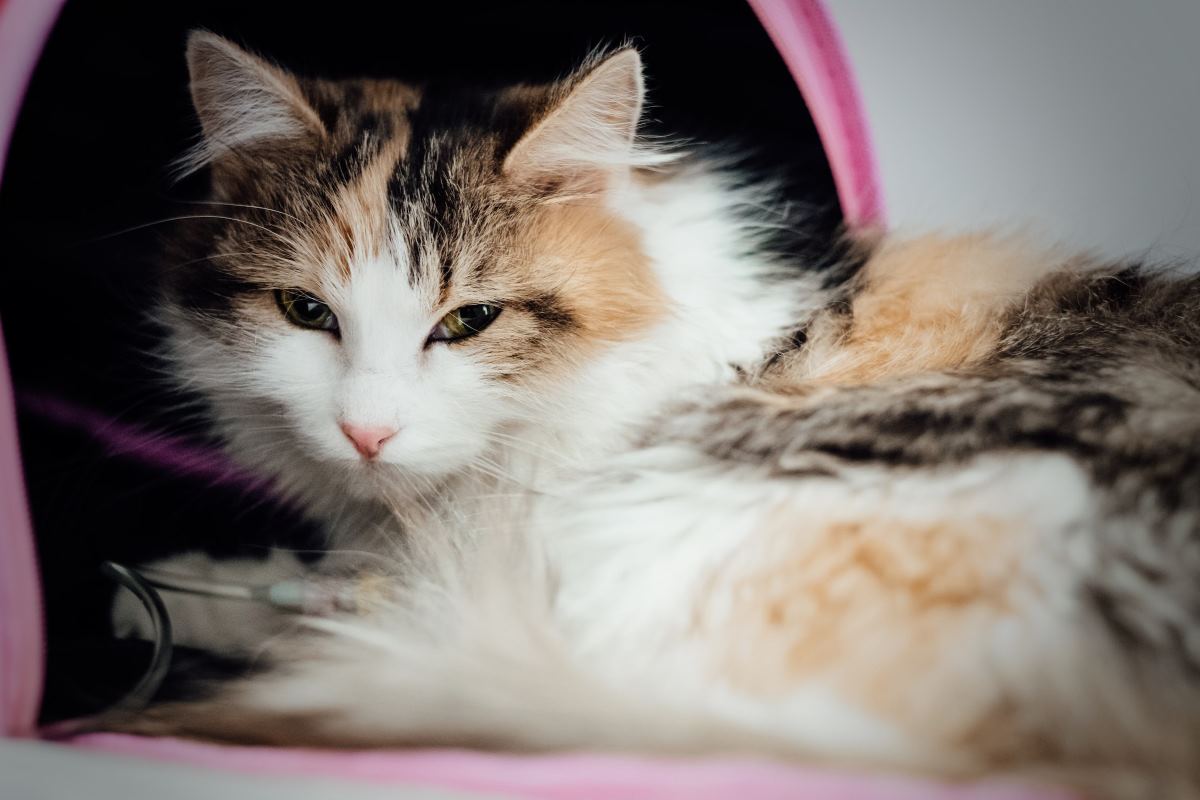
How to support your cat with gentleness
When a cat shows these signs, your role becomes one of quiet support. The goal is to make life as comfortable as possible. Set up a soft bed in a peaceful, warm place where your cat can rest without being disturbed.
Give your cat space if that is what they prefer, but stay close enough to reassure them. Speak softly, move slowly, and offer affection only if it is welcomed. For many cats, a calm presence means more than constant handling.
You can also offer small amounts of appealing food: warmed wet food, a little warm chicken broth, or a favorite treat if your veterinarian says it is appropriate. Even a few bites or licks are worthwhile when a cat is no longer eating normally.
It is important to contact your veterinarian as well. A professional can assess your cat’s comfort, explain what is happening, and discuss the best way to ease suffering. In some cases, supportive care may help. In others, the focus may need to shift toward keeping your cat as peaceful as possible.
If your cat is in pain, seems disoriented, or can no longer stand, do not wait too long before asking for help. A veterinary visit can clarify whether the situation is part of a natural decline or whether another treatable problem is present.
Making the most of precious final moments
These moments are undeniably sad, but they can also be tender and meaningful. Many people find comfort in focusing on small details: the way their cat sleeps, the sound of a weak purr, or the familiar habit of resting a paw against a hand.
Keeping familiar routines can be reassuring. A favorite blanket, a beloved toy, or the sound of your voice can create a sense of continuity and calm. Cats often feel safer when their surroundings stay predictable.
If children are part of the family, simple goodbye rituals can help them understand and process what is happening. A drawing, a soft goodbye stroke, or a few quiet words can make the experience gentler and more personal.
Taking a photo or recording a sound can also be comforting later, but only if it does not disturb the moment. The point is not to document sadness for its own sake, but to preserve the memory of a companion who has been deeply loved.
Honoring your cat’s memory with love
Losing a feline companion leaves a real emptiness behind. Grief does not look the same for everyone, and it is perfectly natural to feel sadness, relief, guilt, or all three at once. These emotions often come in waves.
Many people find comfort in keeping a few meaningful objects: a collar, a favorite toy, a photo, or a blanket that still carries a familiar scent. Small keepsakes can help preserve the bond that was built over years of shared life.
What matters most is that your cat was loved and cared for until the end. Gentle attention, patience, and presence are gifts that animals feel in their own way, even when they are too weak to respond as they once did.
The signs of decline in a cat remind us how fragile and precious these relationships are. Paying attention early, trusting your instincts, and asking for veterinary guidance when needed can make a difficult time a little more humane. Above all, your cat benefits from your calm voice, your kindness, and the comfort of being near someone they trust.
latest posts published

Dog Supplies: Essential Checklist Before Adoption (2026 Guide)
How to Understand Your Hamster’s Behavior

How to Feed an Unweaned Kitten –
Medium-Haired Cats: Breeds, Temperament, and Prices – Cat Breeds
When and How to Find an Emergency Veterinarian

Chocolate Labrador: This Secret Could Save Its Health

What Should I Do If My Dog Breaks a Leg?
The Modern Challenges Facing Farmers Today –

Healthy Dog: How to Spot the Key Warning Signs