
Dwarf rabbits are often poorly understood by their owners, even though they require careful attention and a diet adapted to their specific needs. Before adopting one, it is essential to learn what they should eat, what they must avoid, and how their daily feeding routine supports both their health and longevity.
Rabbit nutrition is not a detail. Because these animals have very specific digestive needs, even small mistakes can lead to serious health problems. In some cases, poor feeding habits can become dangerous very quickly, which is why it is so important to build the right diet from the start.
1- Water and hay: foods to offer freely
A rabbit should always have constant access to clean water at room temperature. It is generally better to offer water in a bowl rather than a bottle, as many rabbits drink more naturally this way. Fresh water should be checked and renewed regularly so it remains clean and easy to drink.
Rabbits are strict herbivores, which means they eat only plants and grasses. Their digestive system is not designed for cereals, despite what people sometimes assume. A diet that does not match their natural needs can contribute to health issues such as kidney stones and dental disease.
The foundation of a rabbit’s diet should be fresh grass or high-quality hay for rabbits, which provides the fibre needed for healthy digestion and proper tooth wear. Hay must always be available, and rabbits should eat it in significant volume throughout the day. Quality matters: good hay is usually green, made of long stems, and free from dust. Those are all signs of a better product.
2- Vegetables for fibre, vitamins, and hydration
Vegetables and leafy greens also play an important role in the rabbit’s diet because they provide fibre, vitamins, minerals, and additional hydration. They help make the diet more varied while supporting the digestive system.
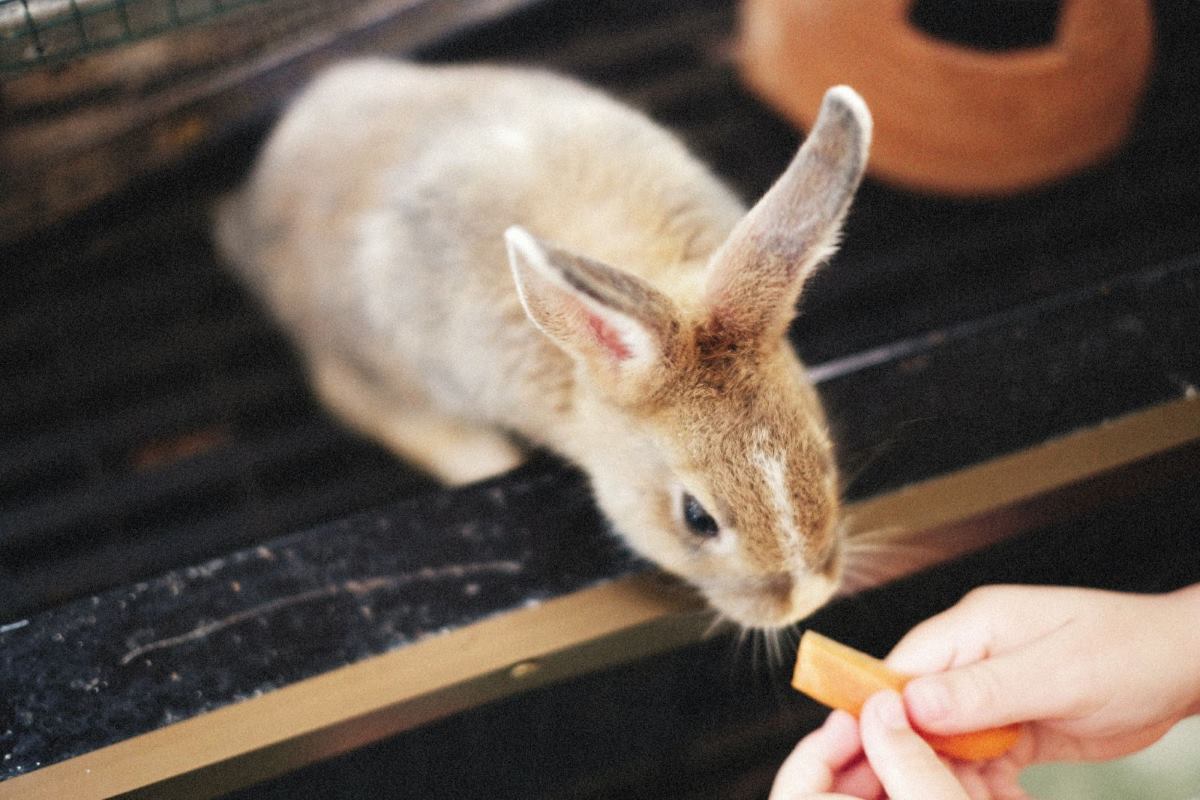
Fresh vegetables are beneficial, but not all of them should be offered in large amounts. Carrots, for example, should be treated as a treat rather than a staple food because they are relatively high in sugar.
It is better to focus on green vegetables such as celery, parsley, batavia lettuce, and carrot tops. These foods should be introduced gradually to avoid digestive upset. Rabbits often have sensitive stomachs, and sudden dietary changes can quickly cause discomfort. Fruit, meanwhile, should only be given in small quantities because of its high sugar content.
3- Pellets to supplement a rabbit’s diet
Hay and leafy greens can be supplemented with a measured amount of pellets. However, the quantity of rabbit pellets should remain limited so that the rabbit continues to eat enough hay and vegetables, which are more important for digestive health.
Whenever possible, choose complete pellets rather than mixed feed. Complete pellets help prevent selective eating, where the rabbit picks out only the tastiest pieces and leaves the rest behind. That kind of sorting can unbalance the diet and reduce the nutritional value of the meal.
Pellets should have a clear composition, ideally without cereal ingredients or added sugar. A simple, well-defined formula is usually preferable because it is easier to control what the rabbit is actually eating.
4- Foods that are toxic to rabbits
Some foods should never be given to rabbits. Potatoes, cereals, and food intended for cats or dogs are not suitable for their diet and can cause serious digestive problems. Rabbits also need to be fed in moderation; too many treats, too much sugar, or overly rich food can lead to obesity and other health complications.
Certain foods are especially harmful, including mushrooms, lettuce, chocolate, and avocado. These should be kept completely out of reach. When in doubt, it is always safer to rely on a simple diet built around hay, water, and carefully chosen fresh vegetables.
latest posts published

Death and Inheritance Rights: Who Inherits Your Pet? What You Need to Know

Senior Dog Kibble: At What Age Should You Switch?

Which Dog Breeds Don’t Shed Hair?

Bringing Your Dog or Cat to the Casino: Is It Really Possible?

What Are the Most Beautiful Cat Breeds?

Why Does My Dog Close Its Eyes When I Pet Its Head?
How to Clean Your Cat’s Ears Without Stress

Sterilizing My Cat: The Real Pros and Cons

Is a Croissant Safe for Your Dog?