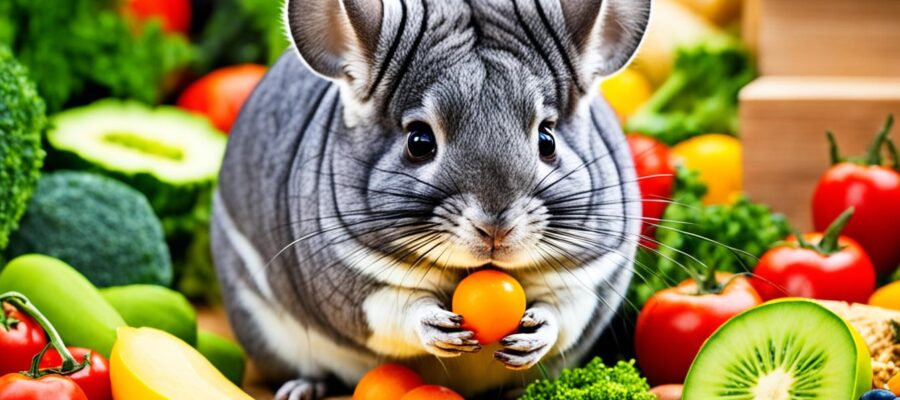
Feeding a chinchilla well is one of the most important things you can do for its health. These small herbivorous rodents have a very sensitive digestive system, so the right diet is not just a matter of preference: it directly affects their comfort, vitality, and long-term wellbeing. A balanced chinchilla diet should be simple, consistent, and built around foods that are easy to digest.
In practical terms, that means making hay the foundation of the menu, supporting it with chinchilla-specific pellets, and offering treats only occasionally. Fresh water must always be available, and any changes to the diet should be introduced gradually to avoid upsetting the digestive system.
Key points to remember:
- High-quality hay and chinchilla-specific pellets cover most nutritional needs.
- Vegetables and fruits should be offered only in very small amounts.
- Fresh water must always be available.
How should you feed a chinchilla?
A chinchilla is an herbivore, and its diet should reflect that. The core of its feeding routine should be good-quality hay, paired with pellets formulated specifically for chinchillas. Because these animals are prone to digestive issues, routine and moderation matter just as much as food choice.
To keep your chinchilla on a suitable diet, follow these basic guidelines:
- Hay: A chinchilla should always have access to fresh, dry, dust-free hay with no mold. It is best offered in a proper hay rack so the animal can nibble throughout the day. Hay supports digestion and helps wear down the teeth naturally.
- Chinchilla-specific pellets: Pellets provide concentrated nutrition, but they should be chosen carefully. Only buy pellets designed for chinchillas, since their nutritional profile is different from that of other small animals. The right quantity depends on the chinchilla’s age, weight, and overall condition, so a veterinarian can help determine the proper portion.
- Vegetables and fruit: These can be given occasionally and in very small amounts, but they should never become a major part of the diet. If you decide to introduce them, do so slowly and watch for digestive upset. Safer options include small portions of vegetables such as carrots, zucchini, and peppers. Apples and grapes are sometimes offered in tiny amounts, but anything overly sweet or watery should be avoided.
- Plant-based treats: Special chinchilla treats can be given from time to time, but only in moderation. Avoid treats made with cereal, nuts, or fatty seeds, as these are not suitable for chinchillas and can disturb digestion.
- Fresh water: Clean water should always be available in a suitable bottle. Change it regularly and make sure the bottle stays clean and functional.
A consistent, balanced feeding routine helps prevent digestive problems and supports overall health. If you are unsure about portions, food quality, or the best way to introduce new items, a veterinarian experienced with exotic animals is the best source of advice.
Foods to avoid for chinchillas
Some foods should not be part of a chinchilla’s diet at all. Their digestive system is delicate, and foods that may seem harmless for other animals can quickly cause trouble here.
Fresh vegetables, juicy fruits, nuts, and cereals are not appropriate for chinchillas. They can lead to digestive imbalance and other health issues, especially if they are offered often or in larger amounts. The safest approach is to keep the diet centered on hay and properly formulated pellets.
That said, a few dried vegetables and herbs may be offered in very limited quantities as an occasional complement. Even then, moderation is essential. These extras should never replace the main diet, and they should not be used too frequently.
It is also important to avoid sudden diet changes. A quick switch in food can easily upset a chinchilla’s digestive system, so any new food should be introduced slowly and carefully. Stability is one of the keys to keeping a chinchilla healthy and comfortable.
FAQ
What are a chinchilla’s dietary needs?
A chinchilla needs a diet based on hay and chinchilla-specific pellets. Hay should always be available in a suitable rack, while pellets help provide the nutritional support the animal needs.
Which foods should be avoided for chinchillas?
Fresh vegetables, juicy fruits, nuts, and cereals should be avoided because they are not suitable for a chinchilla’s delicate digestive system. Dried vegetables and herbs may be offered only in small amounts.
Can chinchillas eat vegetables and fruit?
Yes, but only in small amounts and only occasionally. They should remain a minor part of the diet, with hay and pellets staying at the center of the feeding routine.
How do you keep a chinchilla hydrated?
A chinchilla should always have access to fresh, clean water in a suitable bottle. Check it regularly to make sure it is full and working properly.
What supplements are recommended for a chinchilla?
Plant-based treats can be offered sparingly to add variety, but too much can upset the chinchilla’s digestion. Keep them occasional and limited.
Is it important to maintain a balanced diet for a chinchilla?
Yes. A balanced diet is essential to keep a chinchilla healthy. Provide plenty of hay and the right pellets, and avoid foods that could trigger digestive problems.
latest posts published

Death and Inheritance Rights: Who Inherits Your Pet? What You Need to Know
Senior Dog Kibble: At What Age Should You Switch?

Which Dog Breeds Don’t Shed Hair?

Bringing Your Dog or Cat to the Casino: Is It Really Possible?

What Are the Most Beautiful Cat Breeds?

Why Does My Dog Close Its Eyes When I Pet Its Head?
How to Clean Your Cat’s Ears Without Stress

Sterilizing My Cat: The Real Pros and Cons

Is a Croissant Safe for Your Dog?