

Have you ever noticed scratch marks on your sofa or favorite armchair? If you live with a pet, chances are you have. Cats and dogs can be wonderfully affectionate companions, but their claws can take a real toll on upholstery, armrests, and other pieces of furniture. The good news is that you do not have to choose between a beautiful home and a happy animal. With a few practical adjustments, you can protect your furniture while still respecting your pet’s natural instincts.
Why do animals scratch furniture?
Scratching is not random bad behavior. For many animals, it is a natural part of daily life. Cats, in particular, scratch to mark their territory, leaving both visible marks and scent behind. Dogs may also scratch or paw at furniture for similar reasons, especially when they are anxious, excited, or simply trying to get comfortable.
Scratching also serves a physical purpose. It helps animals stretch their bodies, work their muscles, and keep their claws in condition. In other words, it is both instinctive and полезно for their wellbeing. When an animal is bored, stressed, or under-stimulated, the habit can become more frequent and more destructive.
Sometimes the attraction is as simple as texture. A sofa corner, a chair leg, or a fabric armrest may feel interesting under the paws and claws. Understanding what drives the behavior makes it much easier to redirect it without creating frustration for the animal.
Practical ways to protect your furniture
If you want to protect your furniture without creating tension at home, the best approach is usually to combine several solutions. One method alone may help, but a layered strategy tends to work much better.
Protecting your furniture is especially important in homes with active pets. Start by looking at the areas most often targeted. That will help you choose the most appropriate solution rather than trying to cover everything at once.
Protective covers are often the easiest first step. They create a physical barrier between claws and fabric, and they can be removed and cleaned when needed. For particularly vulnerable pieces, covers can buy you time while you work on training and redirection.
Scratching posts are another key tool, especially for cats. The goal is not just to offer an alternative, but to make that alternative more appealing than the sofa. Placement matters: a scratching post hidden in a corner is much less useful than one placed near the furniture your cat already targets.
Positive reinforcement can also make a real difference. When your pet uses the right object instead of the furniture, reward that choice immediately. A treat, a toy, or even enthusiastic praise can help strengthen the new habit.
Natural deterrents may also help discourage unwanted scratching. Some pets dislike the smell of vinegar or certain citrus scents, which can make treated areas less attractive. These solutions should be used carefully and consistently, and always in a way that remains safe for the animal.
By combining protection, redirection, and training, you can reduce damage without turning your home into a place of constant correction.
Protective covers for sofas and armchairs
Protective covers are one of the most practical ways to preserve sofas and armchairs from claw marks. They are designed to fit a range of furniture styles and can help prevent scratches, dirt, and wear from becoming permanent problems.
Many covers are made from materials that are water-repellent or stain-resistant, which adds another layer of protection in busy households. They are also available in different colors and patterns, making it easier to match your existing decor rather than hiding your furniture under something unsightly.
Ease of maintenance is another major advantage. In many cases, a cover can simply be removed and machine-washed. That makes cleanup much faster than trying to treat stains or repair damaged fabric after the fact.
Some models even add comfort, with padded or soft finishes that make seating feel more pleasant. A well-chosen cover can therefore do more than protect a piece of furniture; it can also improve its day-to-day practicality.
Using scratching posts for cats
For cat owners, scratching posts are one of the most effective tools available. They give cats a proper place to stretch, scratch, and release energy, which can significantly reduce the temptation to attack furniture.
Not all cats like the same surface, so it is worth testing a few options. Some prefer sisal, while others respond better to cardboard or carpeted surfaces. The more appealing the material is to your cat, the more likely it is that the scratching post will become part of its routine.
Placement is just as important as material. Put the post near the sofa, chair, or corner your cat already likes to scratch. If possible, offer more than one post in different parts of the home so your cat always has a convenient option.
You can also make the post more attractive through play. A toy, a few treats, or a bit of interactive time nearby can help your cat associate the post with something positive. Vertical models are often especially useful because many cats enjoy stretching upward as they scratch.
These simple adjustments can protect your furniture while also giving your cat a healthy outlet for its instincts.
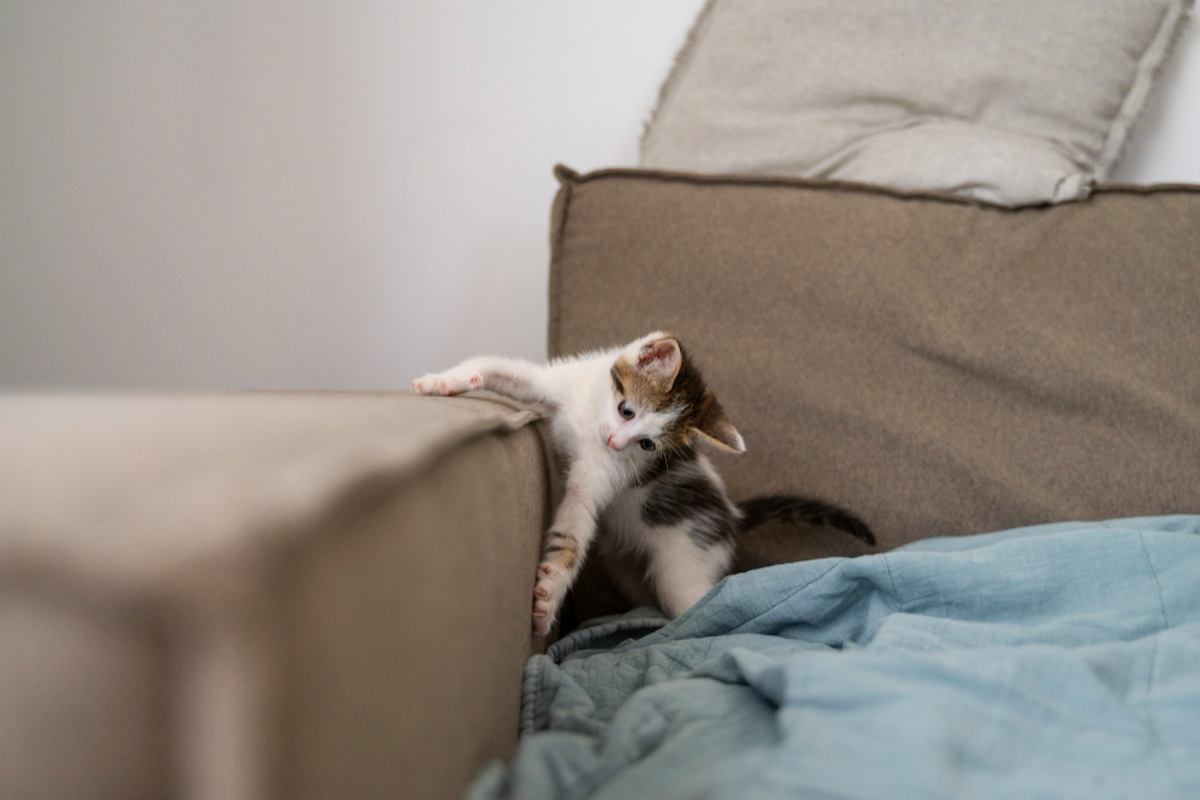
Training your pet to stop scratching furniture
Training is essential if you want long-term results. Without it, your pet may continue returning to the same pieces of furniture whenever it is bored, anxious, or looking for attention. The most effective approach is consistent, patient, and calm.
Start by observing when the scratching happens. Is it after long periods alone? During play? When visitors arrive? Once you understand the trigger, you can offer a better alternative at the right moment.
Place an appealing scratching post or other suitable surface near the problem area. This makes it easier for the animal to make a better choice immediately, instead of having to travel across the room to find the right object.
Reward the desired behavior every time you see it. The faster the reward follows the action, the easier it is for the pet to understand what is expected. Over time, this repetition helps create a new habit.
A regular play routine can also reduce destructive scratching. Animals with too much energy often look for an outlet, and that outlet is not always the one you want. Daily activity helps burn off that energy in a more constructive way.
If your pet seems frustrated, pause and reassess rather than escalating the situation. Training works best when the animal feels encouraged, not cornered.
Natural deterrents that can help
Natural deterrents can be useful when you want to protect certain areas without using harsh products. Sprays made with citrus or vinegar are common choices because many pets dislike the smell. Applied to the right surfaces, they can make furniture less appealing.
Some owners also use essential oils, such as citronella or lavender. These are sometimes mentioned as deterrents, but they should always be handled with care. They need to be properly diluted, and it is important to check whether your pet tolerates them well before using them more broadly.
These solutions are best seen as part of a broader routine rather than a miracle fix. They can support training and furniture protection, but they work most effectively when combined with scratching posts, supervision, and positive reinforcement.
Every animal is different, so it may take some trial and error before you find the right balance. With a bit of patience, you can protect your home while still giving your pet the freedom to behave naturally in the right places.
latest posts published

Pregnant Dog: How to Prepare for the Arrival of the Puppies?

Death and Inheritance Rights: Who Inherits Your Pet? What You Need to Know

Senior Dog Kibble: At What Age Should You Switch?

Which Dog Breeds Don’t Shed Hair?

Bringing Your Dog or Cat to the Casino: Is It Really Possible?

What Are the Most Beautiful Cat Breeds?

Why Does My Dog Close Its Eyes When I Pet Its Head?

How to Clean Your Cat’s Ears Without Stress

Sterilizing My Cat: The Real Pros and Cons