
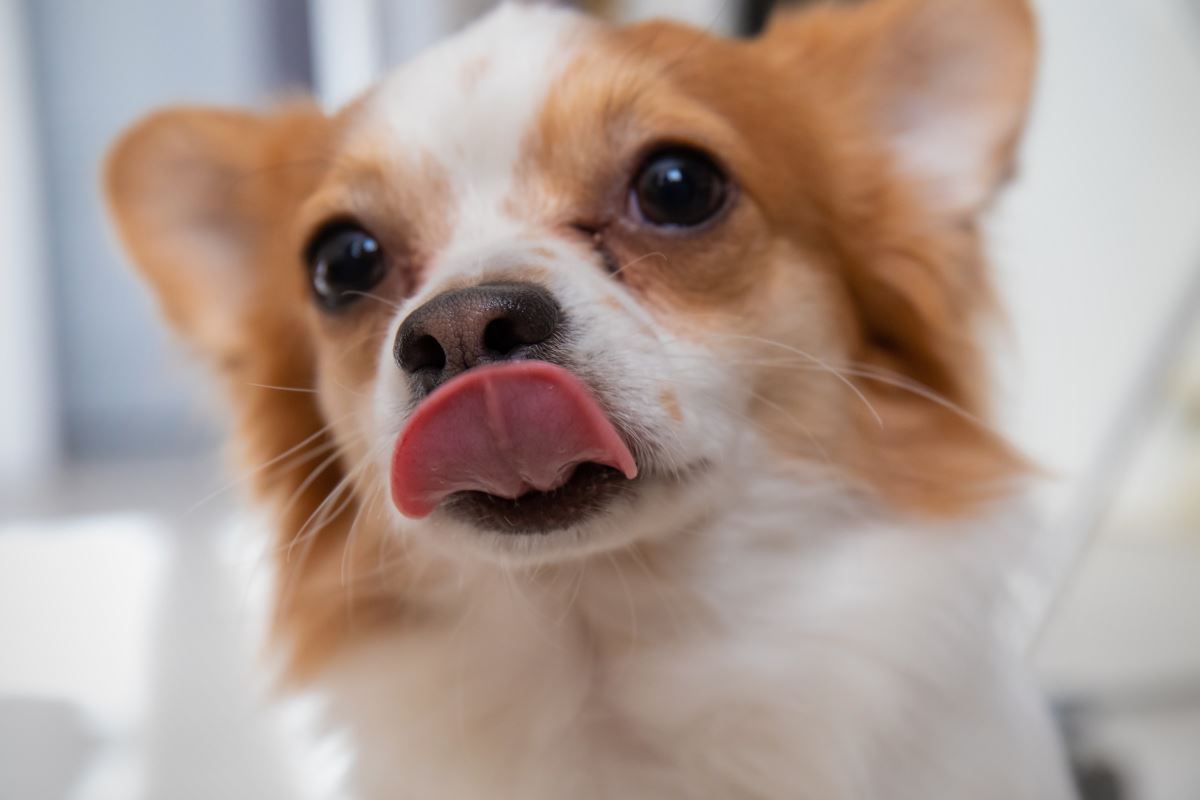
Have you ever wondered why your dog licks its nose? It is one of those behaviours that can seem both charming and puzzling. People do not usually do it themselves, so it is natural to pause and ask what is going on. In most cases, this habit is harmless and is simply part of the way dogs respond to their surroundings. Still, nose licking can sometimes reveal useful information about how a dog is feeling, what it is trying to communicate, or whether something is bothering it physically.
Basics of canine communication
To understand nose licking, it helps to look at how dogs communicate more broadly. Dogs rely heavily on their sense of smell to interpret the world around them, and the nose is central to that process. They also use body language constantly, including facial expressions, posture, tail movement, and small actions such as lip licking or tongue flicking. Vocal sounds like barking, growling, and whining add another layer to that communication.
When a dog licks its nose, it may simply be sending a signal. That signal can be directed at another dog, at a person, or even at the dog’s own environment. The gesture is often subtle, but it can still carry meaning. In some situations, it is part of social interaction; in others, it may be a practical response to a physical sensation, such as moisture, dirt, or irritation on the muzzle.
Why dogs lick their noses
There are several possible reasons for this behaviour, and the context usually matters. One common explanation is that the dog is showing submission to another animal or to a person it perceives as higher in the social order. This kind of “submissive smile” is often accompanied by other signs, such as avoiding eye contact, lowering the body, or rolling over onto the back. In social situations, the gesture can help signal that the dog is not trying to challenge anyone.
Another possibility is much simpler: your dog may just be cleaning its nose after exploring. Dogs use their noses constantly, and they often end up with dust, food residue, moisture, or other substances on the muzzle. A quick lick can help remove anything sticky or uncomfortable. In that sense, the behaviour is no different from a person wiping their hands after touching something messy.
Some dogs also seem to lick their noses because they enjoy the sensation. Just as humans may scratch an itch or adjust a position to feel more comfortable, a dog may use its tongue to relieve a minor discomfort. If there is a slight irritation, dryness, or tickle on the nose, licking may provide temporary relief.
Is it dangerous for a dog to lick its nose?
In most cases, nose licking is not a problem at all. It is a normal behaviour that many dogs display from time to time, and it does not usually require intervention. That said, there are situations where the habit deserves closer attention.
If a dog is sick, for example with an infection or a contagious condition such as kennel cough, it is wise to be cautious. While nose licking itself is not necessarily the cause of spread, frequent contact with secretions or contaminated surfaces can make hygiene more important, especially in multi-dog environments.
Another situation to watch for is repeated, obsessive licking of one area of the body. This can lead to what are often called lick granulomas. Over time, constant licking can irritate the skin, create inflammation, and cause further damage because the same spot is exposed to saliva again and again. What starts as a minor habit can eventually become a cycle of discomfort and self-trauma.
If the nose licking seems excessive, sudden, or linked to other symptoms such as sneezing, discharge, redness, swelling, or behavioural changes, it is best to speak with a veterinarian. A professional evaluation can help determine whether the behaviour is harmless or whether it points to an underlying medical issue, including allergies or irritation.
What owners should observe
Rather than focusing only on the licking itself, it helps to look at the whole situation. When does it happen? Is it triggered by meeting another dog, receiving attention from a person, or moving through a new environment? Does the dog lick its nose briefly and move on, or does it do so repeatedly and seem distressed? These details can make a big difference in understanding the behaviour.
For example, a quick nose lick during an interaction may simply be part of normal communication. A dog that licks after sniffing around outside may be cleaning its muzzle. But a dog that licks continuously, especially if it seems uncomfortable, may be responding to something that needs attention. Observing the pattern can help distinguish a harmless habit from a sign of irritation or stress.
It is also worth remembering that dogs communicate in a layered way. A nose lick rarely tells the whole story on its own. It should be read alongside posture, facial expression, breathing, tail position, and the overall context. Looking at the complete picture gives a much clearer idea of what the dog may be trying to express.
Understanding the behaviour over time
For many owners, nose licking becomes less mysterious once they begin paying attention to when and why it occurs. The behaviour may serve different purposes at different moments: social reassurance in one situation, simple grooming in another, or a response to irritation in a third. That flexibility is part of what makes canine behaviour so interesting.
As a general rule, occasional nose licking is nothing to worry about. The important thing is to notice changes. If the behaviour becomes much more frequent, appears to be obsessive, or comes with other signs of illness or discomfort, a veterinarian should take a look. Early attention is always better than waiting and hoping the problem will disappear on its own.
With a bit of observation, this small habit can reveal quite a lot about your dog’s state of mind and physical comfort. What may first seem like a random gesture is often just another piece of the quiet, expressive language dogs use every day.
latest posts published
Pregnant Dog: How to Prepare for the Arrival of the Puppies?

Death and Inheritance Rights: Who Inherits Your Pet? What You Need to Know
Senior Dog Kibble: At What Age Should You Switch?

Which Dog Breeds Don’t Shed Hair?

Bringing Your Dog or Cat to the Casino: Is It Really Possible?

What Are the Most Beautiful Cat Breeds?

Why Does My Dog Close Its Eyes When I Pet Its Head?
How to Clean Your Cat’s Ears Without Stress

Sterilizing My Cat: The Real Pros and Cons