
Have you ever spotted a “dog” at the park and felt that something just wasn’t right? Maybe its snout was a little too narrow, its tail too bushy, or its ears stood upright like small radar dishes. What if that so-called dog was actually a red fox trying very hard to pass as a Labrador?
With its fiery coat catching the light and a gait that looks both elegant and playful, the red fox can be surprisingly easy to mistake for a friendly family pet from a distance. Once you know what to look for, though, the differences become much clearer. The best part is that you do not need expert training to tell them apart.
If you want to avoid confusing these two canids again, here is a simple guide to distinguishing a Labrador from a red fox in just a couple of minutes.
When confusion takes over at the dog park
You might call out, “Here, handsome red one!” expecting a Labrador to come trotting over, only to realise that you have just addressed a wild fox. It is the kind of moment that feels funny in hindsight, but in the moment it can leave you speechless.
Picture the scene: you reach out to stroke that beautiful copper-coloured coat, and suddenly those sharp golden eyes meet yours with a wary intensity that no relaxed Labrador would ever give you. One animal is built for human companionship; the other is built for caution, speed, and survival.
My story with Rusty, the “fake” Labrador
When I adopted Rusty from a rural shelter, I was told he was a Labrador mix. His reddish coat made him irresistible, and at first glance he certainly looked the part. But it did not take long before I noticed a few unusual habits: he dug little hiding places everywhere, stalked butterflies with impressive precision, and sometimes let out sounds that were closer to yips than barks.
After an ADN test, the truth came out: Rusty was actually a fox-dog hybrid, which explained why his personality was so unusual. His behaviour sat somewhere between domestic dog and wild animal, with a strong streak of independence that never quite fit the Labrador image I had in mind.
Labrador vs. red fox: the direct comparison
At a glance, both animals can share a reddish coat, but the details tell the real story.
Labrador with a red coat
- Thick tail that wags constantly
- Floppy, soft ears
- Gentle, trusting expression
- Height: 55-62 cm at the shoulder
- Social, eager, and playful behaviour
Red fox
- Bushy tail with a white or black tip
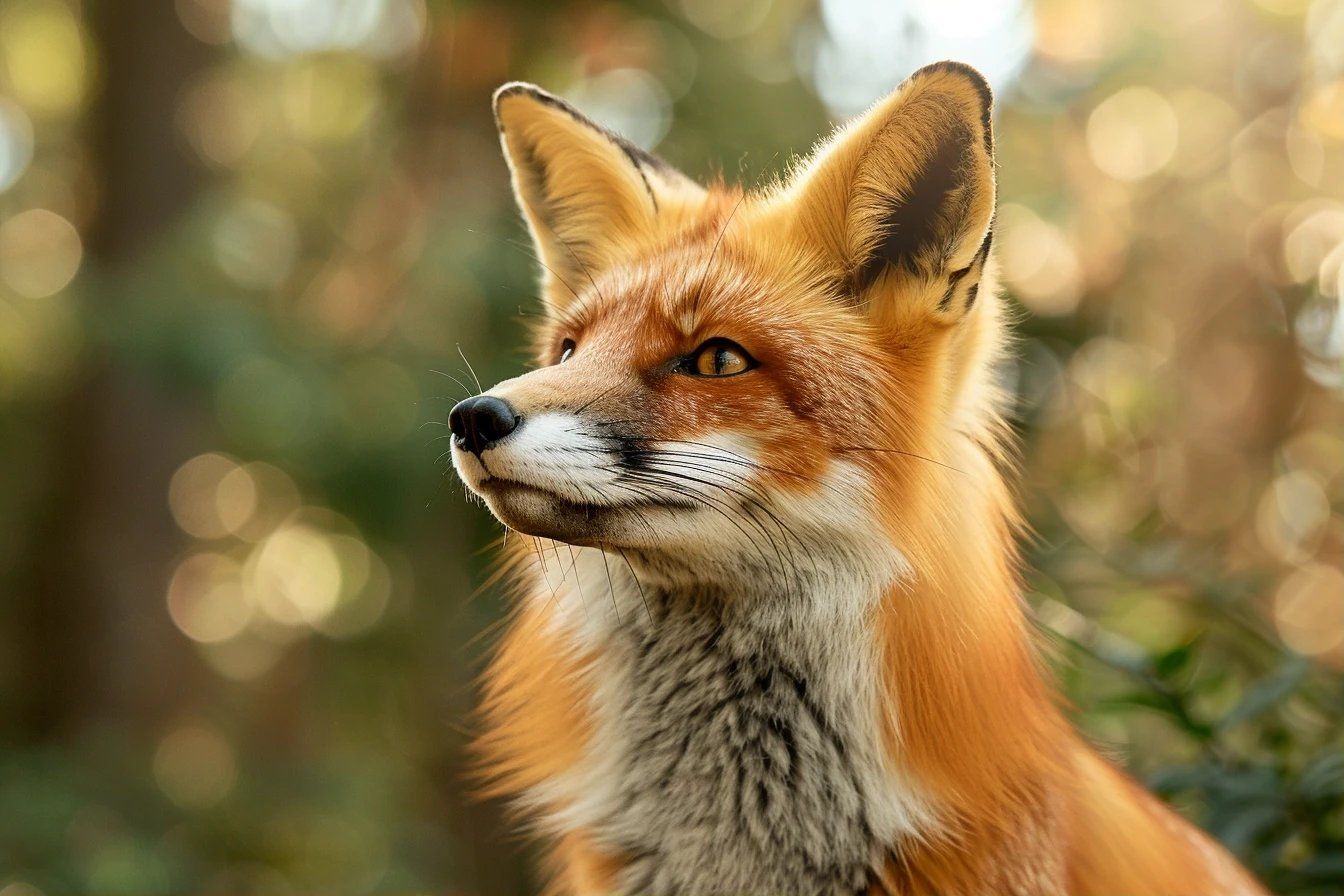
- Triangular ears that stand upright
- Sharp, alert golden eyes
- Height: 35-40 cm at the shoulder
- Careful, cautious, and independent behaviour
The easiest way to tell them apart is the muzzle. A fox has a narrow, pointed face that forms a clean triangle, while a Labrador has a broader, squarer snout that looks much softer in profile. The difference in body language is just as striking: Labradors usually move with open, confident enthusiasm, while foxes tend to remain watchful and ready to slip away at the first sign of danger.
Did you know? A red fox can live up to 15 years in captivity, compared with 12-14 years for a Labrador. That similar lifespan may help explain why some owners do not immediately realise they are dealing with something far less ordinary than a dog.
My go-to app for identifying canids
Ever since the Rusty episode, I have used iNaturalist whenever I come across an animal that does not look quite right. You simply take a photo, upload it, and let the community help identify what you are looking at. It is a useful tool for anyone who enjoys nature walks, animal observation, or just wants a second opinion before jumping to conclusions.
Of course, no app can replace careful observation. But it can be a helpful starting point when you are trying to figure out whether a reddish creature in front of you is a domestic dog, a fox, or something that falls somewhere in between.
How to train your eye to spot the difference
Once you know the key features, identifying the right animal becomes much easier. Start with the ears, then move to the tail, the muzzle, and the overall posture. Labradors have a sturdy, rounded build and an expression that looks openly social. Foxes, by contrast, tend to appear slimmer, more angular, and more alert.
Behaviour matters too. A Labrador usually approaches with confidence, curiosity, and a strong desire to interact. A fox is far more likely to keep its distance, watch quietly, and disappear in a flash if it feels observed. Even when a fox appears calm, that calmness is usually only temporary.
If you are ever uncertain, remember that safe observation is better than close contact. Wild animals should be admired from a distance, and domestic animals should be approached only when their owner says it is okay.
Enjoy the beauty without mixing them up
Red-coated canids are beautiful, whether they are loyal companions or wild animals with a mysterious charm. The important thing is to appreciate them for what they are. With a little practice, you can stop confusing the friendly Labrador with the elusive red fox and start noticing the distinctive traits that make each one unique.
So the next time you see a reddish animal on a walk, take a closer look at the ears, the snout, the tail, and the way it moves. Those small details will tell you far more than colour alone ever could.
latest posts published

Pregnant Dog: How to Prepare for the Arrival of the Puppies?

Death and Inheritance Rights: Who Inherits Your Pet? What You Need to Know

Senior Dog Kibble: At What Age Should You Switch?

Which Dog Breeds Don’t Shed Hair?

Bringing Your Dog or Cat to the Casino: Is It Really Possible?

What Are the Most Beautiful Cat Breeds?

Why Does My Dog Close Its Eyes When I Pet Its Head?

How to Clean Your Cat’s Ears Without Stress

Sterilizing My Cat: The Real Pros and Cons