
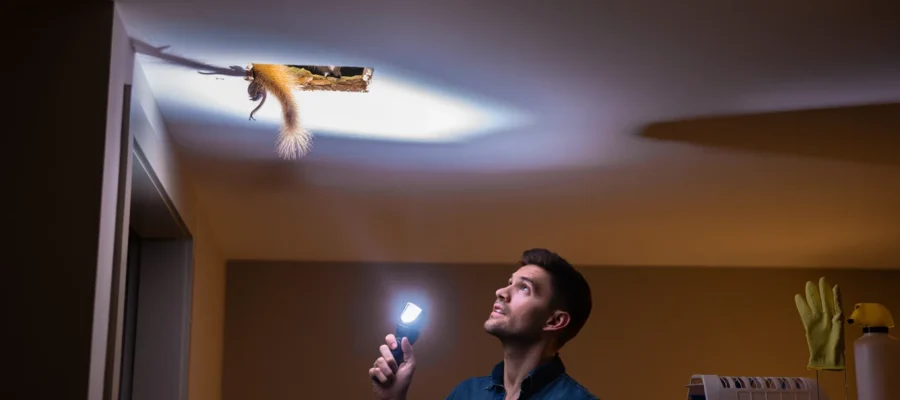
Do you hear scratching, hurried scurrying, or other faint noises above your head, especially at night? Those sounds may be more than a nuisance. They can be a clear sign that a rodent has settled into the ceiling or attic space. Whether it is a mouse, a rat, or a dormouse, an unwanted animal in the roof area can cause damage and create health concerns if the situation is ignored. The sooner the problem is identified, the easier it is to limit the consequences and restore peace at home.
Recognising the signs of a rodent in the ceiling
Rodents rarely announce themselves directly, but they usually leave several clues behind. Learning to spot them quickly can help you act before the infestation spreads.
Characteristic noises are often the first warning. Mice tend to make light, fast scratching sounds, while rats are usually louder and heavier, with more noticeable movements. Dormice can be even easier to detect because they often create distinct nighttime thuds or galloping noises that stand out in a quiet house.
Visible traces are another important clue. Look for droppings: mouse droppings are typically small and oval, while rat droppings are larger and more cylindrical. You may also notice chewed insulation, damaged materials, or yellowish urine stains on ceilings or in attic areas.
Smell can also reveal a hidden problem. A persistent ammonia-like odour, dampness, or a musty scent may suggest that rodents have been present for some time. When an infestation is established, the smell often becomes stronger and easier to detect.
Why rodents settle in ceilings and attics
Ceilings, lofts, and attic spaces offer rodents several advantages at once, which is why they are such common hiding places.
Warmth and insulation make these areas especially attractive. In colder months, the insulation provides shelter and comfort, and it can also serve as nesting material. This is one reason rodents often choose roof spaces when they are looking for a safe place to breed.
Easy access is another factor. Rodents can squeeze through surprisingly small openings. They may enter through cracks in walls, damaged roofing, vents, gaps around pipes, or displaced tiles. Once inside, they can move through concealed spaces without being seen for long periods.
Quiet surroundings also work in their favour. The space above a ceiling is usually undisturbed, dark, and rarely checked closely. For a rodent, that makes it an ideal refuge from daily household activity.
How to get rid of rodents in the ceiling
Dealing with a rodent problem effectively usually requires more than one approach. The best results come from combining removal, deterrence, and prevention.
Mechanical traps remain one of the most reliable methods. Spring traps and live-capture traps can be placed along walls, near droppings, or close to signs of movement. Food-based bait such as peanut butter, chocolate, or dried fruit can help attract mice or rats to the trap. If you use traps, check them regularly and place them carefully to avoid accidental contact.
Natural repellents can be used as a supporting measure. Peppermint essential oil is often used to create an unpleasant scent around affected areas. Ultrasonic devices and mothballs are also sometimes mentioned as deterrents, although their effectiveness can vary. These solutions may help disturb rodents, but they are usually not enough on their own if the infestation is already well established.
Professional pest control becomes the safest and most practical option when the problem is serious. A qualified exterminator has the experience, equipment, and treatment products needed to handle a larger infestation properly. This is especially important if rodents are active in hidden areas that are difficult to reach or if the infestation appears to be growing.
Preventing rodents from coming back
Once the immediate problem has been dealt with, prevention is essential. Without it, the same animals—or new ones—may return to the same space.
Seal every possible entry point. Fill cracks with mortar, repair damaged sections of the roof, and install grilles or mesh over vents and openings. Check the exterior of the house regularly, especially after storms or seasonal weather changes, when new gaps may appear.
Remove food sources. Store food in airtight containers, sweep up crumbs, and avoid leaving pet food exposed. Even small amounts of accessible food can attract rodents and encourage them to stay nearby. Standing water should also be avoided where possible.
Make the surroundings less attractive. Keep vegetation trimmed back from the house, store firewood away from exterior walls, and remove piles of rubbish, building debris, or other sheltered spots that can serve as hiding places. A tidy perimeter makes it harder for rodents to approach unnoticed.
When to call a professional
Some situations call for expert help from the start. If the noises continue despite your efforts, if you discover significant damage to the insulation, or if you suspect a large infestation, it is wise to contact a professional without delay.
Rodents reproduce quickly, which means a small problem can escalate fast. For example, a female mouse can give birth to as many as 50 young per year. That kind of growth makes early action especially important. In a roof space, where damage can remain hidden for some time, waiting too long may allow the infestation to spread to other parts of the home.
A specialist can also help identify how the animals entered in the first place, which is often the key to preventing a repeat problem. In many cases, removal and proofing need to happen together for the solution to last.
Protecting your home for the long term
A rodent in the ceiling should never be ignored. Even if the signs seem minor at first, the issue can quickly become more serious. Damage to insulation, wiring, and stored materials can be costly, and the presence of rodents may also create sanitary concerns that are harder to manage later.
The most effective response is a combination of observation, targeted action, and prevention. Listen carefully for unusual sounds, inspect the roof area when needed, address weak points in the building, and keep the home less inviting to pests. Taking these steps early can save time, money, and stress.
By acting promptly and staying vigilant, you greatly improve your chances of keeping the problem under control and restoring a quiet, comfortable home.
latest posts published

Pregnant Dog: How to Prepare for the Arrival of the Puppies?

Death and Inheritance Rights: Who Inherits Your Pet? What You Need to Know

Senior Dog Kibble: At What Age Should You Switch?

Which Dog Breeds Don’t Shed Hair?

Bringing Your Dog or Cat to the Casino: Is It Really Possible?

What Are the Most Beautiful Cat Breeds?

Why Does My Dog Close Its Eyes When I Pet Its Head?

How to Clean Your Cat’s Ears Without Stress

Sterilizing My Cat: The Real Pros and Cons