
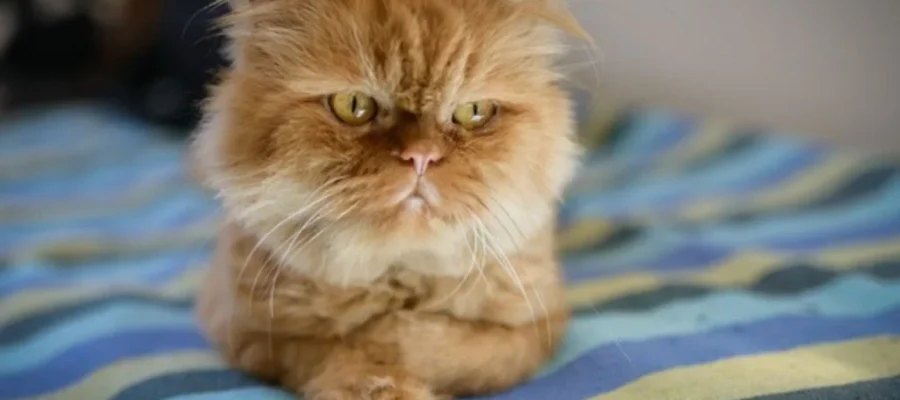
Origins of the Persian Cat
Despite its name, which evokes the ancient Persian Empire, now Iran, the Persian cat is in fact an Anglo-Saxon breed with a long and fascinating history.
The first Persians were descended from the Turkish Angora, a long-haired cat that originated in the Middle East. The earliest specimens were brought to Europe in the 17th century, notably by the Italian explorer Pietro Della Valle, who returned with cats known for their silky coats. But the Persian we know today, according to the breed standard, was developed in Great Britain in the late 19th century, where British breeders carried out a lengthy selection process to create the breed’s distinctive physical traits.
Good to know: crossing the British Shorthair with the Persian produced the British Longhair, showing the diversity of lines that came from this breed. The Exotic Shorthair, created in the late 1960s in the United States, is the short-haired variety of the Persian and remains one of the breed’s most successful modern developments. The first official Persian standards were established in 1889, marking the beginning of its international recognition.
Persian Cat Temperament
This bundle of fur has a personality that matches its appearance: soft, rounded, and calm. An iconic example of a quiet cat breed, this feline is especially affectionate and regularly asks for cuddles. It should always be handled gently, because it does not like being jostled and may become distant if treated too roughly.
More than most cats, the Persian loves routine and familiar habits. Change and disruption, such as moving house, a new child, a separation, or changes in meal times, do not sit well with it and can even cause stress. It prefers a stable, peaceful environment where it can live quietly and comfortably.
Although very calm, this cat still knows what it wants, so consistent training is needed from a young age. Deeply attached to its owners, it seems to have eyes and purrs reserved for them. Its sociable nature and balanced temperament make it an ideal companion for people looking for a peaceful, affectionate cat. While it may seem somewhat reserved with strangers at first, it is usually friendly once it has become accustomed to their presence.
The Ideal Owner for a Persian Cat
The Persian is an affectionate and especially endearing cat. For that reason, it forms very close bonds with its owner and suits many different types of households.
Whether you live alone, as a couple, or with children, and whether you are young or older, this cat can quickly find its place in the home. Its calm nature and balanced temperament make it an ideal companion animal that adapts easily to different lifestyles. It especially appreciates human company and develops strong bonds with all members of the family, while still keeping enough independence not to be overly demanding.
With children, it is generally patient, as long as they respect its need for quiet and learn to handle it gently.
A Persian Cat in an Apartment?
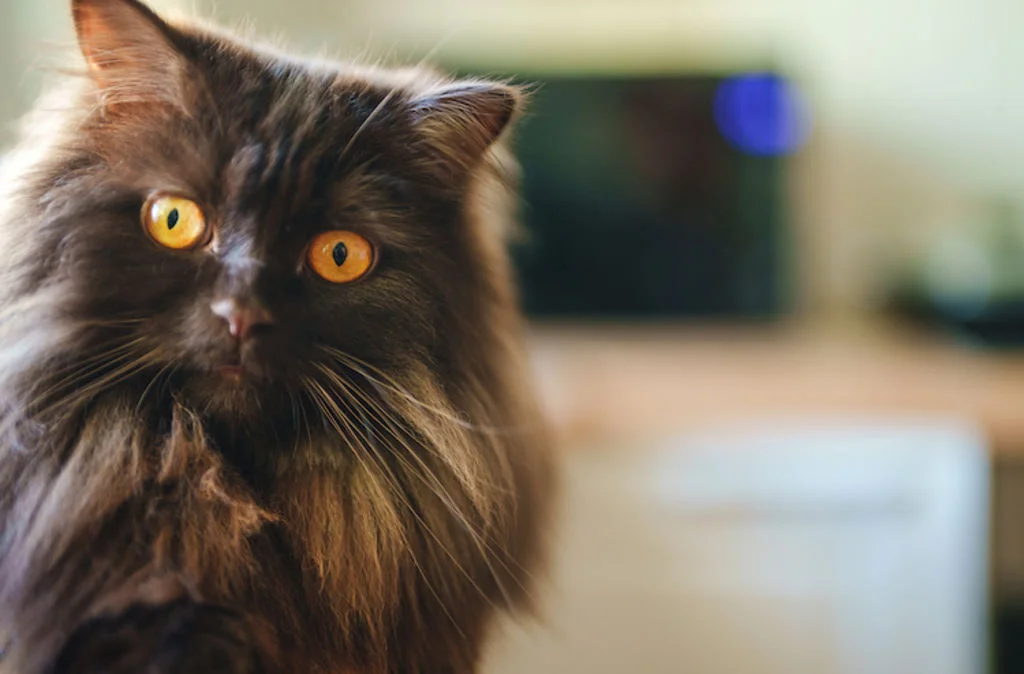
The Persian is the perfect apartment cat: discreet, calm, and easy to live with. It does not enjoy hectic atmospheres, and serenity is what suits it best. Its peaceful temperament makes it an ideal companion for smaller spaces, where it thrives without needing access to the outdoors.
Its fairly independent side also helps it tolerate solitude well if you are away during the day. It will happily spend its time alternating naps and moments of observation, provided its environment is comfortable and reassuring. Still, make sure it has dedicated spaces, including elevated observation points and soft corners where it can retreat and feel secure indoors.
What Activities Suit a Persian Cat?
Its slightly lazy side sometimes gives way to a few playful sessions. Cat toys are ideal for stimulating your Persian:
- plush mice,
- crumpled paper balls,
- cat trees,
- scratching posts, and more.
These activities help keep it fit. Although naturally calm, it especially enjoys interactive toys such as feather wands or feather balls, which stimulate its hunting instinct while respecting its relaxed pace.
To enrich its environment, choose suitable enrichment toys such as food puzzles or kibble dispensers that encourage movement while rewarding the effort.
A cat tree with wide, comfortable platforms will give it a high vantage point while also meeting its need to scratch and stretch.
Physical Characteristics of the Persian Cat
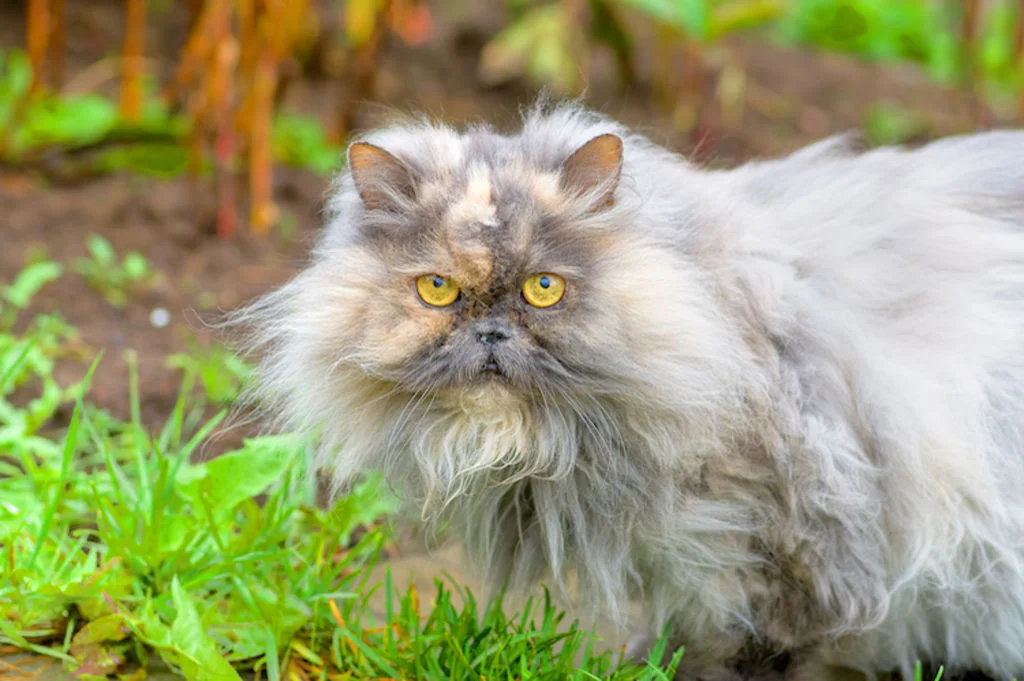
The Persian is a cat breed best known for its coat and its flattened muzzle. It is important to note that this feature has sometimes been developed to an excessive degree in certain breeding lines.
As a result, the Persian’s flattened nose and watery eyes can lead to health problems. That is why the quality of the breeder you choose matters so much.
All coat colours are recognised, including bi-colour. Long all over the body, including the shoulders, the fur is dense, fine, and silky. An abundant undercoat gives the coat its volume. The very full ruff extends down between the front legs and under the belly.
Its official breed standard published by the LOOF (Livre officiel des origines félines) gives all the details of the physical traits the Persian should display:
The head is round and massive, with a broad skull forming a dome. The face is round, with a soft expression and a well-rounded bone structure. The cheeks are broad and strong, with prominent, full cheekbones. In profile, the forehead, nose, and chin are aligned on the same vertical plane.
The muzzle should be round, broad, and full, showing a perfect bite. The chin is strong.
Round, large, and set well apart, the eyes have a gentle expression. Their colour, as intense as possible, should match the coat.
The ears are nearly round, not too open at the base, small and well spaced, and positioned to preserve the rounded shape of the head. The inside of the ears is well furnished in the Persian.
Thick and powerful, the neck is short, making the head appear set into the shoulders.
Body: cobby and massive, with rounded shoulders and hips of equal width. The back is straight. The chest is broad. The ribcage and abdomen are well rounded. The cat should be well muscled without obvious obesity.
The legs are short, sturdy, strong, and straight.
The tail is short, thick at the base, ending in a rounded tip but proportionate to the length of the body. In the Persian, the tail is very full.
Size and Weight of the Persian Cat
This medium-to-large cat has a stocky build. It measures about 30 cm in length and can weigh up to 7 kg.
Persian Cat Care
Grooming the Persian Cat
The Persian’s very thick coat requires daily brushing with a special brush or comb. A wide-toothed comb and a soft brush are particularly recommended for detangling effectively without irritating the cat’s sensitive skin.
Neglecting grooming quickly leads to the formation of mats and knots, which can be painful for your cat and may also cause skin problems by preventing the skin from breathing properly.
During shedding periods, when loose hair falls out heavily, brushing should be increased, ideally to two or three sessions a day. To make brushing easier and keep the coat in good condition, it is advisable to use a special grooming powder for cats or talc on areas that tend to become greasy. Brushing should always be done in the direction of the coat, with particular attention to sensitive areas such as the belly, neck, and the back of the legs, where tangles form more easily.
Santévet’s advice: if the Persian’s fur is too tangled and you cannot remove the knots, make an appointment with a groomer or even your veterinarian rather than causing the animal pain.
This cat’s eyes should be cleaned when necessary using suitable veterinary products.
Also watch for tartar on the teeth and arrange for a dental cleaning if needed.
Feeding the Persian Cat
A cat that exercises very little can be prone to obesity. Monitor portions and avoid foods that are too fatty.
Good-quality kibble and wet food are recommended. Ask your veterinarian for advice on adjusting portions. And read this article to find out how many times a day you should feed your cat.
Good to know: while grooming itself, the Persian swallows hair and then regurgitates hairballs. If that does not happen, the hair can cause health problems such as constipation or intestinal blockage. That is why it is so important to brush it regularly.
Persian Cat Health Problems: Respiratory Issues
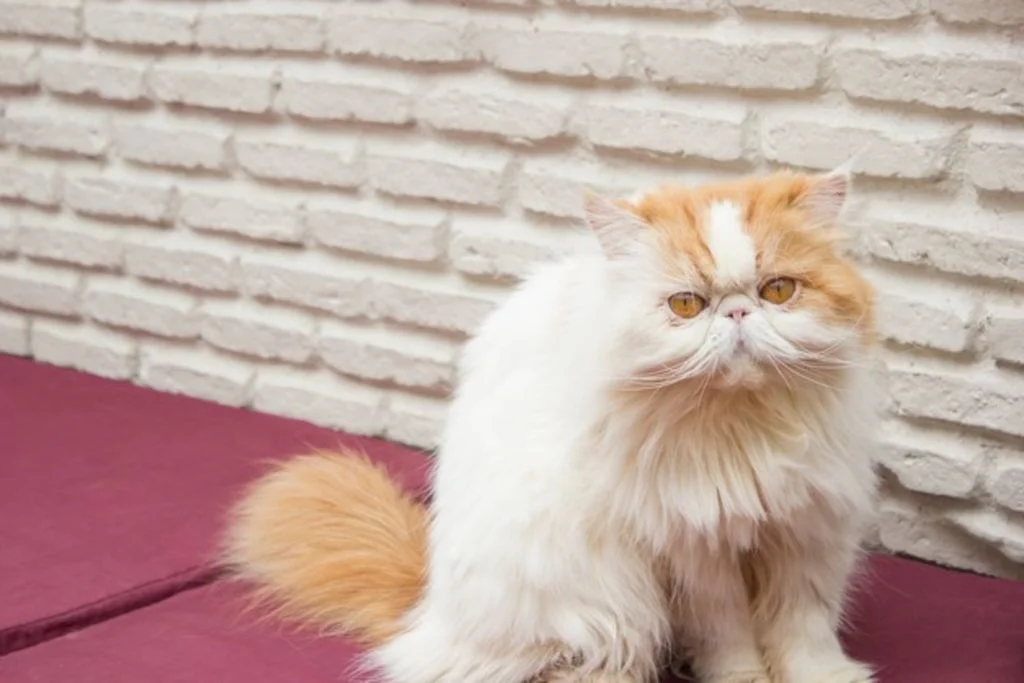
The Persian cat has fragile health because of its flattened muzzle. Respiratory problems may appear, as well as inflammation in the nose or throat.
With our Persian cat insurance, you can manage your companion’s healthcare budget with peace of mind and be reimbursed for up to 100% of veterinary costs in the event of both accident and illness.
Other Persian Cat Health Problems
Genetic diseases
The Persian, which may be grey or multicoloured, can be prone to hypertrophic cardiomyopathy, a disorder of the myocardium (heart disease).
Urinary infections
It may also suffer from urinary disease or infection, or develop urinary stones, especially in neutered cats.
Feline diabetes
Diabetes means chronic hyperglycaemia linked to a disorder of glucose metabolism, as in humans.
Dental tartar
Brushing a dog’s teeth can sometimes be straightforward, but it is a different story with a cat, especially one that does not like being handled. If in doubt, your veterinarian will tell you whether a dental scaling procedure under general anaesthesia is necessary.
Budget to Plan for a Persian Cat
In addition to the purchase price, a Persian requires an annual budget for food, veterinary care, grooming, and accessories. Its long coat needs especially regular maintenance, and its brachycephalic build can also contribute to certain eye and respiratory issues.
Veterinary Costs
| Veterinary costs | Average prices |
|---|---|
| Veterinary consultation | €40 to €60 |
| Annual vaccination | €70 to €90 |
| Dewormers and antiparasitics | €60 to €150/year |
| Neutering | €80 to €150 |
| Spaying | €120 to €220 |
| Urinary disease: treatment and follow-up | About €600/year |
| Dental scaling | About €180 |
| Diabetes: treatment and follow-up | €60/month, or about €720/year |
| Urinary stones: surgery and care | About €1,100 |
| Ophthalmology consultation | €80 to €150 |
| Abdominal ultrasound | €100 to €200 |
| Blood test | €70 to €150 |
Example reimbursements with Santévet
| Care | Price without insurance | Reimbursement with the Confort+ plan |
|---|---|---|
| Dental scaling | €180 | €144 |
| Diabetes treatment | €600/year | €480 |
| Urinary stones: surgery/care | €1,100 | €880 |
Food
The food budget depends on the quality of the products chosen and the proportion of wet food. Maintaining an ideal weight is important, especially for cats that are not very active.
| Food | Average price |
|---|---|
| Premium kibble | €25 to €45/month |
| Wet food | €20 to €45/month |
| Treats | €5 to €10/month |
Grooming and Care
The Persian is one of the cat breeds that requires the most upkeep. Its long, dense coat must be detangled very regularly, and its eyes often need frequent cleaning.
| Grooming and care | Average price |
|---|---|
| Brush and comb | €20 to €50 |
| Cat shampoo | €10 to €25 |
| Eye hygiene products | €5 to €15/month |
| Professional grooming | €40 to €80 per session |
| Litter | €15 to €35/month |
Other Expenses
| Other expenses | Average price |
|---|---|
| Litter box | €20 to €60 |
| Bowls | €10 to €40 |
| Cat tree | €50 to €250 |
| Scratching post | €15 to €60 |
| Toys | €20 to €80/year |
| Carrier | €30 to €100 |
How Much Does a Persian Cat Cost from a Breeder?
The price of a LOOF-registered Persian kitten generally ranges from €800 to €1,500, with prices sometimes higher for certain lines or for cats intended for showing or breeding.
What Annual Budget Should You Plan for a Persian Cat?
Including food, litter, grooming, and an average reserve of €300 to €700 per year for illness and unexpected veterinary expenses, you should plan on roughly €1,100 to €2,500 per year, not including the kitten’s purchase price or the initial cost of equipment.
If you like American or Anglo-Saxon cats, learn more about the American Curl, the Scottish Fold, the Maine Coon and the Exotic Shorthair.
latest posts published
Pregnant Dog: How to Prepare for the Arrival of the Puppies?

Death and Inheritance Rights: Who Inherits Your Pet? What You Need to Know
Senior Dog Kibble: At What Age Should You Switch?

Which Dog Breeds Don’t Shed Hair?

Bringing Your Dog or Cat to the Casino: Is It Really Possible?

What Are the Most Beautiful Cat Breeds?

Why Does My Dog Close Its Eyes When I Pet Its Head?
How to Clean Your Cat’s Ears Without Stress

Sterilizing My Cat: The Real Pros and Cons