
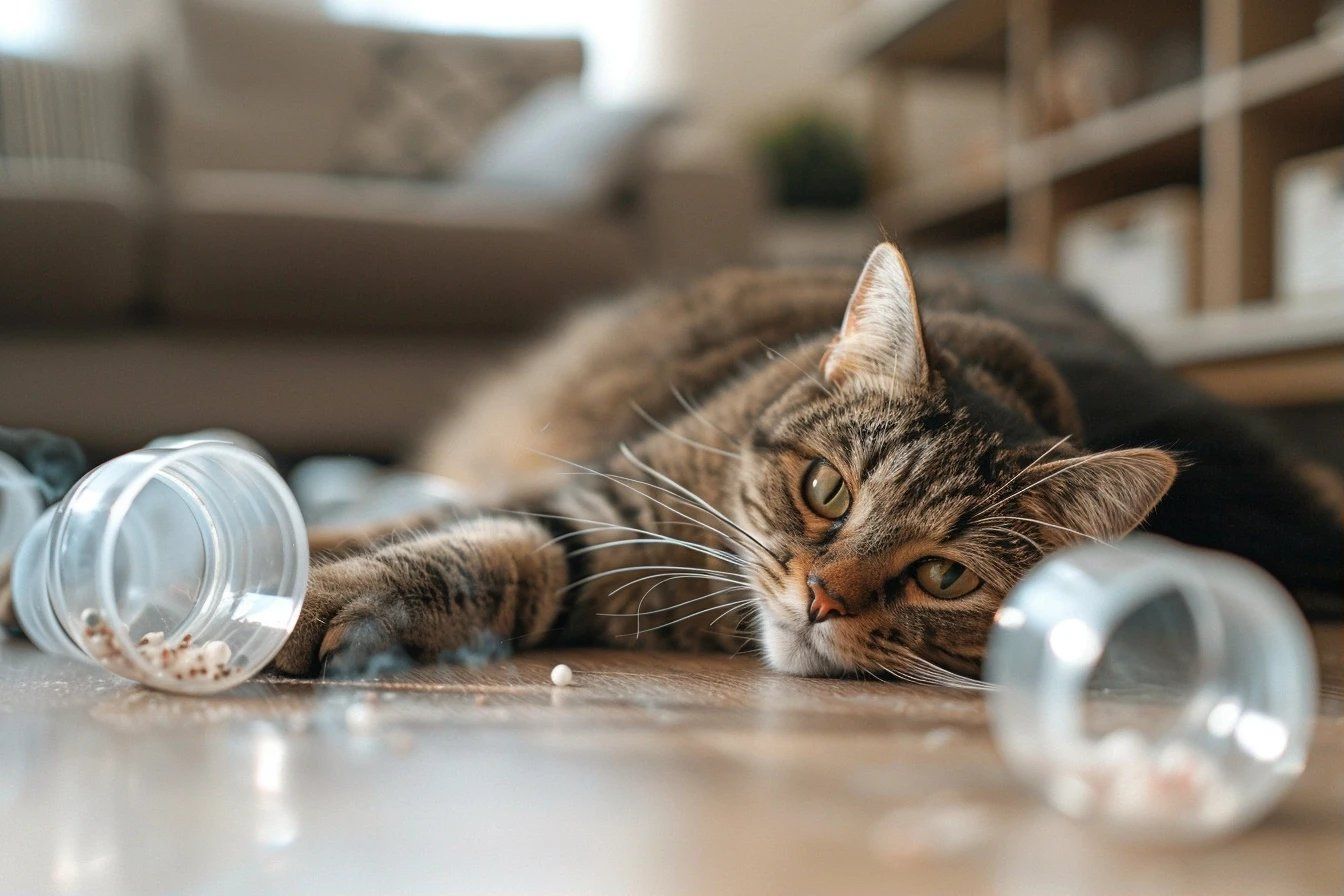
The sharp, irritating smell that stings your nose, the white cloud spreading through the living room… When I set off my first flea fogger, I thought I had finally found the miracle solution to the infestation that had turned my home into a battleground. What I did not realize was that this seemingly simple method can hide serious risks for our four-legged companions.
Have you ever felt that kind of frustration? Watching your cat scratch until the skin breaks, spotting those tiny jumping parasites on the sofa, and feeling you have to act immediately. The danger is that urgency can lead to deadly mistakes. My cat Félix nearly paid the price for mine.
Do not repeat what I did. In just a few minutes, I want to walk you through the essential things you need to know before using a flea fogger in your home.
The hidden trap almost nobody talks about
“Can you leave your cat in the room during fogging?” I asked myself that question far too late. The answer is an absolute no, and getting it wrong can put your pet’s life at risk.
When I discovered the flea infestation in my home, I rushed out to buy foggers without really thinking it through. The label did say to remove animals, but in my mind that warning was mainly for birds and fish. That was a serious mistake.
Everything changed when Félix, curious as ever, came back into the living room too soon, while the air was still heavy with residue. His eyes were watering, he started coughing, and his paws were trembling. We headed straight to emergency veterinary care. The diagnosis was mild insecticide poisoning.
How to use flea foggers without risking poisoning
Before fogging
- Remove all animals from the home, including cats, dogs, birds, and fish
- Cover or remove food bowls, toys, blankets, and cushions
- Close food cupboards and protect anything edible
- Measure the exact surface area carefully, since one fogger generally covers 25-30 m²
During treatment
The fogger releases its active ingredients over a period of roughly 2-3 hours. That dense mist contains pyrethroids, which can be toxic to the nervous system of mammals when exposure is too concentrated.
This is why it is essential to leave the treated area completely empty and not return too soon, even if the room seems calm from the outside.
After fogging
Wait at least 4 hours before bringing your pets back inside. Open windows and ventilate thoroughly, vacuum up any visible residue, and clean surfaces that animals may touch regularly, such as floors, baseboards, and furniture.
My preferred alternative, which is genuinely safer
After Félix’s scare, I looked for a more cautious approach. What has worked best for me is a combination of daily vacuuming, a natural pyrethrum spray in lower concentration, and a proper antiparasitic treatment for the animal itself. Used together, these steps can eliminate most fleas without exposing pets to the same poisoning risk.
The key is to treat both the environment and the animal at the same time. Adult fleas make up only a small part of the infestation; eggs and larvae hidden in carpets, rugs, cracks, and upholstery are what keep the problem going. If you only treat one side of the equation, the fleas usually come back.
Personal tip: I now use food-grade diatomaceous earth lightly sprinkled on carpets, left for 2 hours, then vacuumed up. It is a natural option that can help dry out fleas, and it has the advantage of being far less risky for Félix, who loves sniffing around every corner.
That said, any powder or spray should be used carefully, especially in a home with pets. Always make sure the product is suitable for your situation and follow the instructions exactly.
How to recognize signs of poisoning in your pet
If your animal shows any of the following symptoms after fogging, contact a veterinarian immediately:
- Excessive drooling or vomiting
- Tremors or seizures
- Breathing difficulties
- Unusual lethargy or weakness
These signs can appear within 2-6 hours of exposure. The faster you react, the better the chances of a full recovery.
Even if the symptoms seem mild at first, do not wait to see whether they disappear on their own. With insecticide exposure, time matters.
Safety comes first
Flea foggers can be effective when they are used correctly. But when pets are involved, their safety has to come before convenience. Take the time to read every label, respect the evacuation period, and never hesitate to ask your veterinarian for advice if you are unsure.
Félix is doing perfectly well now, and our home is finally free of fleas. That experience taught me a lesson I will never forget: when chemicals are involved, it is always better to be overly cautious than to deal with irreversible consequences later.
If you have ever used flea foggers at home, it is worth reviewing the process carefully before doing it again. A few extra precautions can make all the difference for the animals who depend on us.
latest posts published
The dangers of heatwaves for your cat

Pregnant Dog: How to Prepare for the Arrival of the Puppies?

Death and Inheritance Rights: Who Inherits Your Pet? What You Need to Know

Senior Dog Kibble: At What Age Should You Switch?

Which Dog Breeds Don’t Shed Hair?

Bringing Your Dog or Cat to the Casino: Is It Really Possible?

What Are the Most Beautiful Cat Breeds?

Why Does My Dog Close Its Eyes When I Pet Its Head?

How to Clean Your Cat’s Ears Without Stress
