
Essential takeaways (TL;DR)
- Long-haired cats such as the Persian, Maine Coon, and Birman are admired for their soft, luxurious coats.
- Daily brushing is essential to prevent tangles and reduce the amount of hair swallowed during grooming.
- Plan on an agglomerating litter and a budget of around €500 to €2,000 for a pedigree kitten from a breeder.
The Persian
The Persian is one of the most iconic cat breeds, valued for its elegance and gentle nature. It has a flat face, round head, and large expressive eyes. Unlike hairless breeds, it has a dense, silky coat available in many colors, including calico.
This calm, affectionate cat is especially suited to quiet indoor living. Its thick coat, however, requires daily brushing to prevent mats and preserve its soft texture.
The Persian is also predisposed to certain health issues, including respiratory problems linked to its brachycephalic build.
For more information about potential medical costs, you can request an online quote for your cat. This will give you a personalized price for suitable health insurance.
The Birman
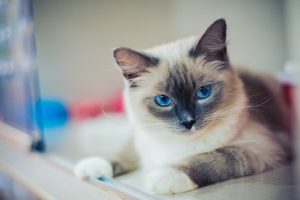
The Birman is an elegant cat with a calm and affectionate temperament. It is distinguished by a silky medium-length coat, a white body with darker “gloves” on the paws and muzzle, intense blue eyes, and a medium-sized frame.
Originally associated with Burma, this breed is known for its gentle, sociable nature and for staying close to its owners. Birmans are intelligent, curious, and playful cats that adapt well to family life.
Its coat requires moderate maintenance outside shedding periods, with regular brushing to prevent tangles. It is an ideal companion for a peaceful home.
The Ragdoll
The Ragdoll is a long-haired cat known for its large size and exceptionally docile temperament. Originally from the United States, it stands out for its silky medium-length coat, often bicolored, with markings on the legs, face, and tail.
This cat is especially appreciated for its calm, affectionate, and relaxed personality, often compared to a “living plush toy” because it tends to go limp when handled, like a rag doll. Highly sociable, it enjoys spending time with its owners and gets along well with other animals.
The Maine Coon
The Maine Coon is known for its large size, along with a thick, silky coat often seen in tabby patterns and large pointed ears with tufts of hair.
Originally from the United States, it is famous for its impressive stature, muscular body, and long, bushy tail. Despite its size, the Maine Coon is gentle, affectionate, and highly sociable. Intelligent and curious, it is also an excellent hunter. It adapts well to different households, gets along with children and other pets, and needs regular brushing to keep tangles under control.
Regular coat care and veterinary checkups to monitor general health can help reduce the risk of illness. Pedigree cats are often more fragile from a health standpoint, so it is worth considering cat health insurance to help cover veterinary costs such as consultations, tests, treatments, and surgery.
The Norwegian Forest Cat
The Norwegian Forest Cat, or Norwegian cat, is a sturdy and elegant breed known for its thick, water-resistant coat, which helped it thrive in cold climates.
Its long, muscular body, large pointed ears, and bushy tail give it a majestic appearance. It is extremely agile and an excellent climber. Independent yet affectionate, it is also very sociable and fits in well with families and other animals.
Like the British Longhair, the Norwegian Forest Cat is intelligent, energetic, and curious, but its dense coat requires regular care to prevent matting.
The Turkish Angora
The Turkish Angora is an elegant, graceful breed characterized by its long, silky, glossy coat, often white but available in other colors too. With expressive eyes and a slender body, this cat is known for its lively and affectionate personality. Very playful and curious, it enjoys exploring its surroundings and interacting with its owners.
Intelligent and sociable, it gets along well with children and other animals. Although its coat needs regular grooming to prevent tangles, it is generally less demanding than some other long-haired breeds. The Turkish Angora is an excellent companion for active families.
The Siberian
The Siberian is a robust, majestic cat native to Russia, known for its dense, water-resistant coat that helps it adapt to cold weather. Its fur is remarkable, made up of three layers.
Its powerful, muscular body and thick, silky coat give it an imposing yet elegant look. Very affectionate, the Siberian is also sociable, playful, and highly intelligent. It enjoys interacting with its owners and gets along well with children and other animals.
Although its coat requires regular brushing to avoid mats, the Siberian is an excellent companion for active families and busy households.
The Himalayan, with its silky coat
The Himalayan is a long-haired cat, often mistaken for the Persian because of its similar appearance. It has a dense, silky coat, often bicolored or colorpoint, with darker markings on the ears, face, paws, and tail.
This cat has a calm, gentle, and affectionate temperament and is valued for its sociable, easygoing nature. It is also very attached to its owners and seeks their company.
Although its coat needs regular grooming to prevent knots, the Himalayan is a companion well suited to indoor life and gets along with everyone in the household, including children.

The Balinese, or long-haired Siamese
The Balinese is a long-haired cat often described as the “long-haired Siamese”. It has a slender, graceful body with well-developed muscles and an elegant silhouette. Its fine, silky coat, usually in point coloration, is one of its defining features.
The Balinese is very active, curious, and intelligent. It loves interacting with its owners and exploring its environment. Sociable and affectionate, it is also very vocal, much like the Siamese.
Although its coat requires regular grooming to prevent knots, it remains an excellent companion for energetic families.
The Somali
The Somali is a medium-haired cat often compared to a small puma because of its lean build and agile movements. Its coat is soft and silky, with a ticked tabby pattern that gives it a wild appearance.
The Somali is extremely intelligent, curious, and energetic, and it loves to explore. Very sociable, it is also deeply attached to its owners and constantly seeks attention and affection. This is a lively, playful cat, often compared to an adult kitten because of its mischievous personality. Although its coat needs moderate care, it remains an ideal companion for active families. To help it burn off energy, offer toys such as balls or a cat tree.
The domestic long-haired cat, or long-haired alley cat
Some European domestic cats, or alley cats, can have long or medium-long hair, with a wide variety of colors and patterns. This cat is often described as independent, but also affectionate and sociable, enjoying its owners’ company while also being able to entertain itself.
It is highly adaptable and can live comfortably in either an apartment or a house. Its coat, while less demanding than that of some purebred cats, still needs regular brushing to prevent tangles.
What budget should you plan for a long-haired cat?
Veterinary costs to expect
Veterinary expenses can vary widely depending on the type of care needed, and especially on the clinic and the region. To avoid unpleasant surprises, it is a good idea to ask your veterinarian for a quote.
How much does a long-haired kitten cost?
The price of a long-haired kitten depends on several factors, such as the breeder’s reputation, the kitten’s background, the bloodline, and sometimes the geographic location. Here is a general price range for these breeds:
- Persian: Between €600 and €1,500, or more depending on pedigree quality.
- Birman: Around €700 to €1,200, but more for champion lines.
- Ragdoll: Between €800 and €1,500, depending on background.
- Maine Coon: Between €800 and €2,000, sometimes more for a high-quality cat.
- Norwegian Forest Cat: Around €600 to €1,200, depending on the breeder and bloodline.
- Turkish Angora: Between €500 and €1,200, depending on pedigree quality.
- Siberian: Between €700 and €1,500, sometimes more for a show-quality cat.
- Himalayan: Around €600 to €1,200, sometimes more for a champion line.
- Balinese: Between €700 and €1,500, depending on the bloodline and origin.
- Somali: Around €700 to €1,300, depending on the breeder.
Santévet tip: If you want to welcome a long-haired animal into your home, you do not necessarily need to go through a pedigree breeder. Many kittens and adult long-haired cats end up in shelters, so it is worth asking around.

What health problems can long-haired cats develop?
Long hair can create health issues if it is not properly maintained:
- Mats and knots: The main issue is the formation of knots in the coat, which can lead to skin irritation, infection, and discomfort. Daily brushing is essential to prevent this.
- Excess shedding: All cats shed, but long-haired breeds such as the Persian or Maine Coon tend to shed more visibly. Regular grooming helps keep the coat in good condition.
- Skin problems: Because of their dense coats, long-haired cats can develop dermatological problems, including fungal infections or irritation caused by moisture trapped in the fur.
- Hairball ingestion: During grooming, these cats swallow a lot of hair, which can lead to vomiting and, in severe cases, digestive blockages.
- Allergies: As with all cats, long-haired cats can suffer from allergies, including food or environmental allergies.
What is the most beautiful long-haired domestic cat breed?
The domestic cat breed with the longest coat is generally the Persian. Its fur is dense, silky, and requires daily care to prevent tangles.
Other breeds, such as the Maine Coon or the Norwegian Forest Cat, also have long coats. But Persian coats are often considered by long-haired cat lovers to be the most luxurious and abundant among domestic breeds.
To remove knots from a medium- or long-haired cat, it is important to work gently. Grooming should also be carried out almost daily.
- Use a cat detangling spray or lukewarm water to soften knots before working them out.
- You can remove them by hand or with a wide-tooth comb.
- If the tangles are too severe, use rounded-tip scissors to cut them carefully.
- Seek help from a groomer or veterinarian if needed. Regular detangling is recommended to prevent knots from forming.
| According to the Virbac veterinary laboratory, long-haired, woolly-coated cats such as the Persian need daily attention. These cats should be brushed every day to prevent mats from forming. They may also need occasional shampoos. In short, they require daily care. Brushing is therefore essential for the Persian, Birman, Maine Coon, Ragdoll, and similar breeds. |
Which brush should you choose for grooming a long-haired cat?
For a long-haired cat, it is recommended to use:
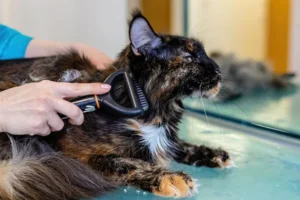
- A long-hair brush with soft teeth to avoid irritating the skin.
- A detangling brush (such as a pin brush) and a wide-tooth comb are also effective for removing knots.
- A slicker brush with fine pins is ideal for deeper grooming, especially in hard-to-reach areas like behind the ears or under the legs.
Which litter should you choose for a long-haired cat?
Long-haired cats, especially those that shed heavily, benefit from clumping, antibacterial litter that helps keep the environment clean and odor-free.
It is also advisable to choose a fine, soft litter to avoid irritation while still trapping shed hair effectively. Some silica or crystal litters can also be practical because they control moisture and reduce unpleasant odors. Make sure the litter box is cleaned frequently so hair does not become trapped in the granules.
| Type of litter | Advantages | Disadvantages | Average price |
| Non-clumping mineral litter | Affordable, easy to find, good liquid absorption. | Poor odor control, produces dust. | €0.5 to €1 per kg. |
| Clumping mineral litter | Forms easy-to-remove clumps, good odor control. | More expensive and sometimes dusty. | €1 to €2 per kg. |
| Plant-based litter | Biodegradable, eco-friendly, lightweight, low dust. | Absorption varies by brand. | €1 to €3 per kg. |
| Silica litter | Excellent absorption, effective odor control, low maintenance. | More expensive, and some cats dislike the crystal texture. | €2 to €5 per kg. |
| Wood pellet litter | Natural, eco-friendly, low dust, economical over time. | May be less appealing to some cats. | €0.50 to €1.50 per kg. |
Long-haired cats are much loved, but they need regular care to avoid health problems. If they live indoors, be sure to provide them with physical and mental stimulation as well.
latest posts published
Pregnant Dog: How to Prepare for the Arrival of the Puppies?
Death and Inheritance Rights: Who Inherits Your Pet? What You Need to Know
Senior Dog Kibble: At What Age Should You Switch?

Which Dog Breeds Don’t Shed Hair?

Bringing Your Dog or Cat to the Casino: Is It Really Possible?

What Are the Most Beautiful Cat Breeds?

Why Does My Dog Close Its Eyes When I Pet Its Head?
How to Clean Your Cat’s Ears Without Stress

Sterilizing My Cat: The Real Pros and Cons