

If you share your life with a hamster, you already know how much these small animals enjoy exploring, climbing, chewing, and burrowing. Keeping them entertained is not just a matter of fun; it is an important part of their daily care. A well-chosen selection of toys can encourage natural behavior, support physical activity, and help prevent boredom. It can also make the cage or enclosure feel more like an enriching living space than a simple container.
Choosing the right toys for your hamster
Hamsters are natural explorers. In the wild, they spend a lot of time moving through tunnels, searching for food, and navigating different surfaces. That instinct does not disappear in captivity. For that reason, the best toys for a hamster are the ones that allow it to run, hide, climb, and chew safely.
Good toys do more than pass the time. They support both mental and physical health. A hamster that has access to a wheel, tunnels, wooden structures, and safe chewing materials is usually more active and more engaged. Chewing is especially important because it helps keep teeth in check, while movement and exploration reduce stress and frustration.
When choosing accessories, size and safety should come first. A toy that is too small, too fragile, or made from unsafe materials can quickly become a problem. It is always better to choose simple, sturdy items designed with small rodents in mind than decorative objects that may look attractive but offer little value to the animal.
There are many different kinds of hamster toys available, from the most familiar to the more creative. Some owners prefer classic running wheels and tunnels, while others add hanging bridges, climbing platforms, or interactive balls. The best choice depends on your hamster’s habits, the available space, and the layout of the enclosure.
Where to buy hamster toys and what to expect to pay
Thanks to online stores and pet retailers, finding hamster toys is easier than ever. Many shops now offer a broad selection of items, from basic essentials to more elaborate enrichment accessories. This makes it possible to build a varied environment without spending a fortune.
Prices can vary widely depending on the materials used, the size of the toy, and its overall design. A simple paper tunnel may cost less than 5 €, while a high-quality wooden wheel can reach 30 €. In general, more durable toys cost more at the outset, but they often last longer and provide better long-term value.
Some retailers also offer free delivery, which can be useful if you are ordering several items at once. Comparing offers is a sensible approach, especially if you want to balance quality, safety, and budget. Rather than buying many cheap accessories at random, it is often wiser to invest in a few useful pieces that your hamster will actually enjoy.
The best toys for your hamster
Here are some of the most practical and enjoyable toys you can choose for a hamster. These options stand out because they are useful, engaging, and generally well suited to the needs of small rodents.
- The wheel: This is the essential toy for most hamsters. It gives them a safe way to run and expend energy. Make sure the wheel is large enough for your hamster’s size and does not have bars or gaps where the animal could get trapped.
- Tunnels and tubes: These are ideal for encouraging exploration and satisfying a hamster’s instinct to move through enclosed spaces. You can use a few simple tunnels or create a more elaborate maze to keep the environment interesting.
- Wooden structures: These are useful for climbing, balancing, and chewing. Always check that the wood is untreated and suitable for rodents, since unsafe finishes or varnishes can be harmful.
- Tissue boxes: A simple tissue box can become a small shelter, a hiding place, or even a chewing activity. It is inexpensive, easy to replace, and recyclable, which makes it a practical addition to the enclosure.
- Interactive balls: These allow a hamster to move around outside the cage while staying contained. If you use one, make sure it is properly ventilated and that the hamster can move comfortably inside it.
Creating a stimulating play environment
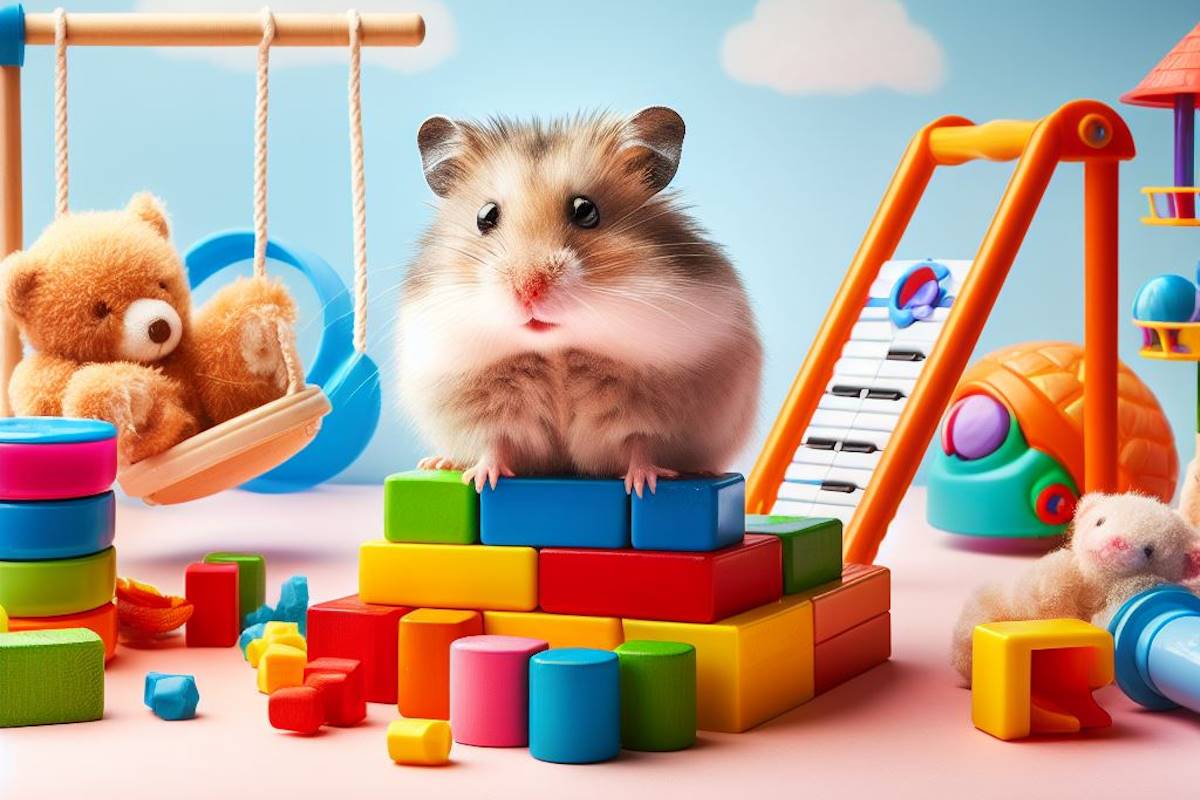
A hamster’s environment should offer more than food, water, and bedding. It should also give the animal opportunities to move, explore, and make choices. Variety matters. If the cage always looks the same, many hamsters will lose interest quickly. Rotating toys and rearranging the setup from time to time can make the space feel fresh without requiring a major redesign.
You do not need expensive equipment to create a rewarding environment. In many cases, the most useful objects are also the simplest: a solid wheel, a few safe tunnels, a chewing toy, and a hiding place. What matters most is that each item serves a purpose and fits the hamster’s needs.
It is also worth observing how your hamster reacts to different toys. Some animals prefer climbing, while others spend most of their time running or hiding. A hamster that ignores one toy may love another, so a little experimentation can help you discover what truly works. By paying attention to your pet’s behavior, you can gradually build an enclosure that feels both secure and stimulating.
Remember, play is not a luxury for a hamster. It is part of a healthy routine. Toys help support activity, reduce boredom, and encourage natural behaviors that would otherwise have little outlet in a confined space. Combined with a balanced diet, a clean and safe habitat, and regular care, they contribute to a happier and more active life for your small companion.
Choosing the best toys is therefore not about filling the cage with random objects. It is about creating a thoughtful environment where your hamster can move, explore, chew, and rest comfortably. With a few well-selected accessories, you can turn an ordinary enclosure into a much richer and more engaging home.
latest posts published

Pregnant Dog: How to Prepare for the Arrival of the Puppies?

Death and Inheritance Rights: Who Inherits Your Pet? What You Need to Know

Senior Dog Kibble: At What Age Should You Switch?

Which Dog Breeds Don’t Shed Hair?

Bringing Your Dog or Cat to the Casino: Is It Really Possible?

What Are the Most Beautiful Cat Breeds?

Why Does My Dog Close Its Eyes When I Pet Its Head?

How to Clean Your Cat’s Ears Without Stress

Sterilizing My Cat: The Real Pros and Cons