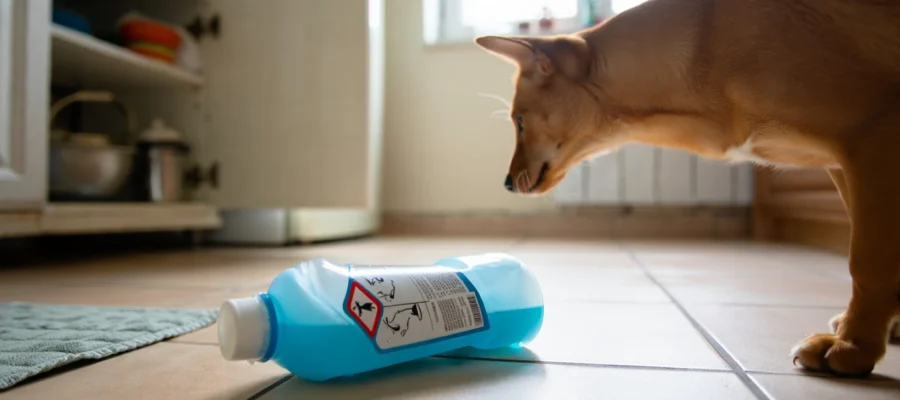
Last week, I came frighteningly close to poisoning my cat, Moustache, with a supposedly “natural” cleaning spray. I had been careful, at least that’s what I told myself. Like many pet owners, I assumed that keeping toxic products out of reach was enough to protect my animals.
That close call forced me to confront an uncomfortable truth: the most dangerous mistake is not always storing cleaners on a high shelf. It is the everyday habit of leaving chemical residues behind on the very surfaces our pets use, lick, touch, and explore. That kind of oversight can harm animals quietly, repeatedly, and often without the owner realizing it until symptoms appear.
If you share your home with cats, dogs, rabbits, ferrets, or any other curious companion, this is worth understanding. The mistake is common, easy to overlook, and completely preventable once you know what to watch for.
The Invisible Danger of Chemical Residue
The number one problem is simple: we clean floors, counters, litter areas, cages, bowls, and furniture with household products, but then we let our animals walk, sit, roll, and groom themselves on those same surfaces before all residue has been removed. What looks clean to us may still carry traces of detergents, disinfectants, fragrances, or other substances that pets can absorb or ingest.
My own wake-up call came after I sprayed an “eco-friendly” cleaner on the kitchen counter. About twenty minutes later, Moustache jumped up to investigate the sink and drank a few drops of water that had collected nearby. After licking his paws, he absorbed enough residue to trigger vomiting and alarming drooling. It was a small moment with very real consequences.
Pets are especially vulnerable because their bodies work differently from ours. They walk on the floor, then lick their paws. They rub against freshly cleaned surfaces. They sniff, chew, and groom constantly. A product that seems harmless to a human can become a source of repeated low-level exposure for an animal. Over time, that exposure may contribute to skin irritation, digestive upset, breathing issues, or other problems that are not always easy to connect to a cleaning session days or weeks earlier.
What makes this danger so insidious is that it does not always look dramatic. Sometimes it is a mild stomach upset, a patch of irritated skin, or an animal acting slightly off after cleaning day. In more serious cases, the signs can escalate quickly. Either way, the risk is real enough to justify changing the way we clean.
Why “Natural” Does Not Mean Safe
One of the biggest myths I believed was that products labeled “natural” or “green” were automatically safer for animals. Marketing makes that assumption easy to accept, but it is often wrong. A product can be plant-based, biodegradable, or sold as eco-conscious and still be irritating or even dangerous for pets.
For example, tea tree essential oil appears in many natural cleaning blends, yet it can cause convulsions in cats. White vinegar, which is widely used in homemade cleaning recipes, may irritate or burn sensitive paw pads and mucous membranes if used carelessly. Even traditional Marseille soap, despite its reputation for simplicity, is not automatically harmless for every animal.
My veterinarian put it bluntly: a product that seems harmless to a person can be a serious threat to a three-kilogram animal. That difference matters. Body size, metabolism, and the ability to process chemicals vary enormously between species. What we consider a mild smell or a small amount can be significant for a pet with a much smaller body and a different biological tolerance.
The lesson my animals taught me: natural is not the same as safe. Nature contains plenty of substances that are toxic, and “eco-friendly” labels do not replace careful reading and common sense.
Since then, I have become much more cautious. I check ingredient lists, avoid using products I cannot identify clearly, and look up unfamiliar substances before bringing them into a home shared with animals.
The Cleaning Habit That Changes Everything
After that frightening incident with Moustache, I completely changed my routine. The rule now is simple: no surface accessible to my pets counts as truly clean until it has been rinsed with clear water.
That extra step may feel inconvenient at first, but it removes most of the residue that could otherwise remain behind. I wipe surfaces again with a damp cloth, rinse floors thoroughly, and ventilate the room after using any product. If I clean a counter, I do not assume it is safe just because it looks dry. If I mop a floor, I make sure the cleaner is not still sitting on the surface where paws will land moments later.
This has made a huge difference in daily life. I no longer worry every time one of my animals walks across a freshly cleaned room or drinks from a bowl placed on the floor. My rabbits can hop across the tile, my cats can investigate the counters, and my ferrets can explore without my constantly second-guessing whether I missed a dangerous trace of cleaner.
It is easy to underestimate the value of that peace of mind. A few extra minutes spent rinsing is a small price to pay for reducing the risk of accidental poisoning or irritation. In a home with animals, finishing the job properly matters just as much as starting it.
Safer Cleaning Options That Really Work
My search for safer alternatives led me to a few practical solutions that are both effective and easier to manage around pets. For many everyday tasks, hot soapy water remains one of the safest and most useful cleaning methods. It handles a surprising amount of dirt and grease without introducing unnecessary chemicals into the environment.
When I need to disinfect, steam is my preferred option. A steam cleaner can help reduce bacteria and viruses without leaving chemical residue behind. For households with animals, that matters because the goal is not only to clean but also to avoid creating new hazards after the cleaning is done.
When a special product is truly necessary, I look for labels that specifically mention safety for pets and then verify the information with my veterinarian if I have any doubt. Some brands now offer formulas designed with homes that include animals in mind, but even then, caution is still essential. A label alone should never replace careful use, proper rinsing, and good ventilation.
In practice, the safest routine is often the simplest one: use the mildest effective product, keep animals away while cleaning, rinse thoroughly, and wait until the area is fully dry and aired out before letting them back in.
Creating Real Safe Zones at Home
How we organize the home also makes a difference. I now think in terms of zones. Areas where my animals eat, rest, sleep, and play are treated as ultra-safe spaces, which means only the gentlest products are used there.
In those areas, I stick to carefully rinsed soap and water, and nothing else unless I know a product is genuinely appropriate for animals. That way, if a pet rolls on the floor, licks a paw, or nudges a bowl across the room, I am not left wondering what they may have absorbed.
This approach also helps me manage the rest of the house more sensibly. There are rooms where stronger products may be necessary, such as the laundry room or guest toilet, and I can keep those spaces separated from where the animals spend their time. That balance allows me to clean effectively without treating the entire home as one indistinct risk zone.
Clear routines also make life easier for everyone else in the household. When the family knows which products are reserved for which areas, it becomes less likely that someone will use the wrong cleaner on a pet bed, food area, or favorite sleeping spot.
A Small Change That Can Prevent Big Harm
Our animals trust us to make their environment safe, even when their instinct leads them straight into every interesting corner of the house. That trust carries responsibility. It is not just about buying the right food, scheduling vet visits, or keeping toxic items locked away. It is also about what remains on the floor, on the counter, and on the furniture after we finish cleaning.
Every extra rinse, every ingredient check, and every careful choice becomes a practical act of protection. These are small habits, but they can prevent irritation, illness, and in some cases far worse outcomes. The good news is that the fix does not require perfection. It simply requires paying attention to the residue we leave behind and treating “clean” as something more than a visual impression.
Since I changed the way I clean, my home feels safer and calmer. I can let Moustache move around without anxiety, and I no longer view every mop session as a potential hazard waiting to happen. That change alone has been worth the effort.
And if you have ever noticed your animal acting strangely after a major cleaning session, it may be worth taking a closer look at the products you use and the way you rinse them away. In many homes, the most effective prevention is not a dramatic new product but a more careful routine.
latest posts published
Pregnant Dog: How to Prepare for the Arrival of the Puppies?
Death and Inheritance Rights: Who Inherits Your Pet? What You Need to Know
Senior Dog Kibble: At What Age Should You Switch?

Which Dog Breeds Don’t Shed Hair?

Bringing Your Dog or Cat to the Casino: Is It Really Possible?

What Are the Most Beautiful Cat Breeds?

Why Does My Dog Close Its Eyes When I Pet Its Head?
How to Clean Your Cat’s Ears Without Stress

Sterilizing My Cat: The Real Pros and Cons