
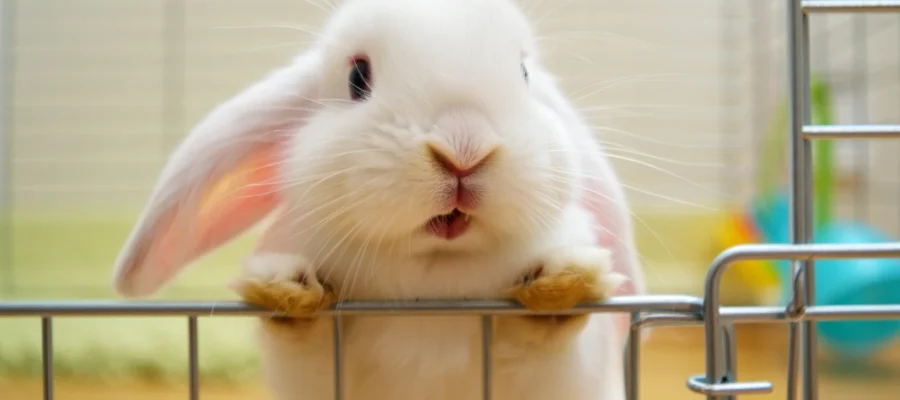
This morning, I found Luna, my lop rabbit, frantically nibbling the bars of her enclosure. That sharp metallic sound made me jump out of bed instantly. If you live with a rabbit, you probably know the scene: a fluffy companion suddenly turned into a determined little gnawer, focused on the cage as if nothing else existed.
If this behaviour worries you, that concern is justified. When a rabbit attacks the bars of its enclosure, it is usually trying to communicate something important. Sometimes the reason is boredom, but not always. Behind what looks like a harmless habit, there can be several different messages your rabbit is trying to send.
In this article, I’ll share what I have learned about this behaviour, combining personal experience with practical guidance from professionals. You’ll see why rabbits do this and, above all, how to help them feel calmer and more comfortable.
Boredom: the number one cause
My vet confirmed it during my urgent appointment with Luna: boredom is still the most common reason rabbits chew at enclosure bars. These intelligent animals need regular mental stimulation in order to thrive.
A bored rabbit often develops what are called stereotypies: repetitive behaviours that serve no real purpose. Bar-chewing is one of them, along with constant pacing or excessive grooming.
At the time, Luna lived in an enclosure that was spacious enough, but it offered very little to do. No toys to rotate, limited time outside, and a dull environment overall. It was the perfect setup for a rabbit to start inventing her own entertainment.
Once I enriched her space with tunnels, chew toys, and hiding spots, the behaviour dropped noticeably. The difference was remarkable.
Stress and anxiety: warning signs you should not ignore
Boredom does not explain everything. A stressed rabbit may also start chewing compulsively. A change of environment, unfamiliar noises, the presence of other animals, or any disruption to routine can trigger anxiety in these sensitive companions.
I saw this happen with my sister’s rabbit after a move. Even though he was used to being around people, he began obsessively chewing the bars for several weeks while he adjusted to his new surroundings.
Other signs often appear alongside this behaviour: a tense posture, ears held rigidly upright, and reduced appetite. An anxious rabbit does not nibble the bars with the same casual energy as a rabbit that is simply under-stimulated.
Unmet natural needs
Domestic rabbits still carry the instincts of their wild counterparts. In nature, they spend long periods chewing roots, bark, and branches to wear down teeth that never stop growing.
When they are not given enough safe materials to gnaw on, they often turn to whatever is available: the bars of their enclosure. In other words, they are telling us, “I need something suitable to chew.”
Something I learned from living with rabbits: every behaviour has a reason. The challenge is learning how to read the message behind it.
Since understanding that, I make sure to keep hazel branches, untreated wooden toys, and mineral blocks available. The bars have become far less interesting as a result.
Possible underlying health issues
Sometimes, this habit points to something more serious. Dental problems, for example, can push a rabbit toward unusual chewing behaviour in an attempt to relieve discomfort.
Rabbit teeth grow continuously. If they do not wear down properly, they can cause real pain. The rabbit then tries to chew almost anything in search of relief.
Nutritional deficiencies, digestive problems, and even intestinal parasites may also lead to unusual feeding-related behaviours. If the habit continues despite changes to the rabbit’s environment, a veterinary check-up is essential.
Practical and effective solutions
I have tested several approaches with my own rabbits and with rabbits belonging to people close to me. Here is what truly helps:
Enrich the enclosure with a variety of toys and replace them regularly. Offer daily time outside the enclosure so your rabbit can explore and move around. Add hiding places and platforms at different heights. Scatter food around the space to encourage natural foraging behaviour.
For Luna, the breakthrough came when I introduced a small obstacle course that she absolutely loves. Now she spends her days hopping, exploring, and playing instead of focusing on the bars.
Patience and observation are your best allies
Every rabbit is different. What works for Luna may not work for yours. The key is to watch your companion carefully and try to identify the real trigger behind the behaviour.
Notice when the chewing happens most often: after waking up, before meals, or when you leave the room? These clues can help you adjust daily routines and choose the right solution. Sometimes a slight change in feeding time or one extra play session is enough to make a dramatic difference.
When to seek professional help
If the behaviour continues or becomes more intense despite your efforts, do not hesitate to ask for help. A veterinarian experienced with NAC can rule out medical problems and guide you toward suitable solutions.
Some animal behaviour specialists also work with rabbits. An outside perspective can reveal details you may have missed and suggest strategies tailored to your rabbit’s specific needs.
Your rabbit is communicating with you
Chewing enclosure bars is never meaningless in a rabbit. It is often a way of expressing a need, discomfort, or frustration. Our role is to understand that message and respond with patience and care.
Since I learned to “listen” to my rabbits differently, my relationship with them has become much richer. They are calmer, more playful, and I can enjoy their charming personalities without constant worry.
And your rabbit? Have you noticed this behaviour? What solutions have worked for you? Sharing your experience can help other rabbit owners better understand their own little companions.
latest posts published
Pregnant Dog: How to Prepare for the Arrival of the Puppies?

Death and Inheritance Rights: Who Inherits Your Pet? What You Need to Know
Senior Dog Kibble: At What Age Should You Switch?

Which Dog Breeds Don’t Shed Hair?

Bringing Your Dog or Cat to the Casino: Is It Really Possible?

What Are the Most Beautiful Cat Breeds?

Why Does My Dog Close Its Eyes When I Pet Its Head?
How to Clean Your Cat’s Ears Without Stress

Sterilizing My Cat: The Real Pros and Cons