
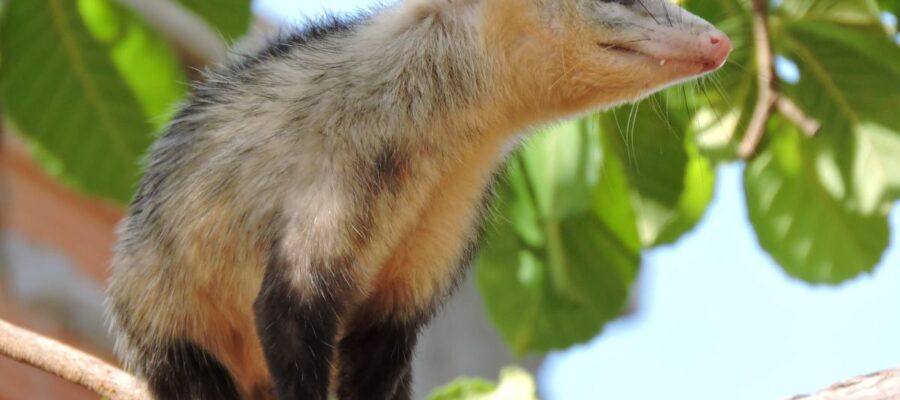
The opossum is a remarkable animal found mainly in North and South America. This marsupial is often overlooked, even though it has a very distinctive biology and an important ecological role. Understanding what makes the opossum unique means looking at its anatomy, lifestyle, family groups, and survival strategies. Far from being just an unfamiliar nocturnal mammal, it is a species adapted to a wide range of environments and capable of thriving in places where many other animals struggle.
The opossum: a little-known American marsupial
The opossum is a marsupial, meaning it is a mammal whose young continue developing after birth in a pouch. It belongs to the Didelphidae family, which includes several marsupial species native to the Americas. Opossums are distributed across a very broad range, from North America to South America, and they can live in forests, grasslands, wetlands, and even urban areas.
They are sometimes mistaken for raccoons because of their general size and habit of rummaging for food, but the two animals are not closely related. Opossums are native to the Americas, and some species have expanded their range as far north as Virginia and beyond. Their adaptability is one of the reasons they have been able to survive in such diverse habitats.
Physical characteristics of the opossum
Opossums have several physical traits that set them apart from other mammals. Their size varies depending on the species and age of the animal. Adults generally measure between 25 and 90 centimetres in length, not including the tail, which can be nearly half of the total body length. The tail is prehensile, which means it can be used to grip branches and help the animal climb and move with ease through trees.
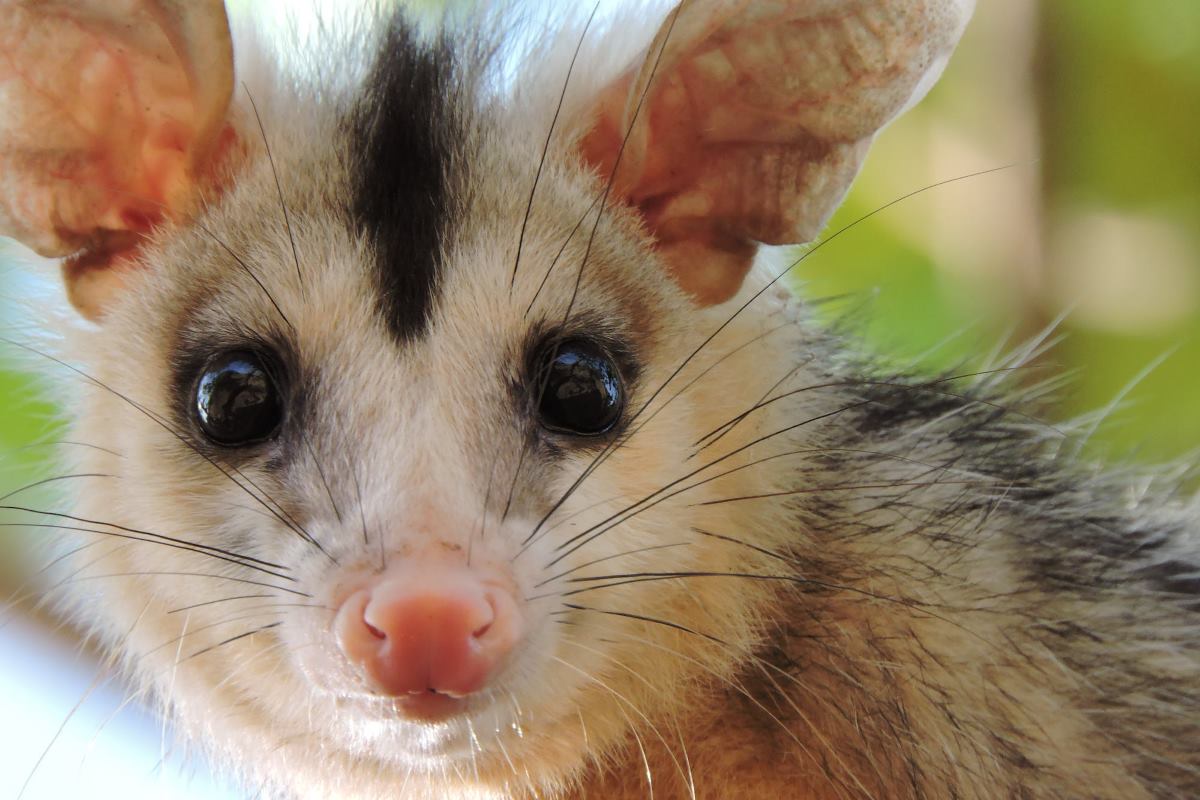
Their fur is usually greyish brown, often with white markings on the face. They have an elongated head, large dark eyes, and a pink snout. Their ears are long and hairless, which gives them a rather unusual appearance compared with many other mammals.
Female opossums also have a pouch on the belly where the young continue their development after birth. This pouch is essential during the earliest stages of life, since newborn opossums are extremely small and vulnerable. It offers warmth, protection, and direct access to milk.
Different opossum species
There are several species of opossums, and some are better known than others. Among the most common are:
- The Virginia opossum (Didelphis virginiana): This is the best-known species in North America and also the largest opossum species, reaching up to 90 centimetres in length.
- The four-eyed opossum (Philander opossum): This species gets its name from the two white spots on its forehead that look like extra eyes. It is native to Central and South America and is found mainly in tropical and subtropical regions.
- The yapok, or water opossum (Chironectes minimus): This semi-aquatic marsupial lives in wetlands across Central and South America. It has webbed feet that help it swim efficiently.
The opossum’s lifestyle
Opossums are nocturnal animals, which means they are active mainly at night. During the day, they rest in sheltered places such as hollow trees, abandoned burrows, or dark spaces beneath buildings.
These marsupials are solitary and territorial. They do not form long-term social bonds with other individuals, apart from the relationship between mother and young. The female takes care of her offspring alone and carries them on her back or in her pouch until they are old enough to move independently.
In terms of food, the opossum is an omnivorous opportunist. It eats a wide variety of items, including fruit, vegetables, insects, small animals, birds, and carrion. Its diet changes according to the season and what is available in its environment, which helps explain how successfully it can live in both wild and human-modified settings.
Coexisting with opossums and humans
In some areas, the opossum is considered a nuisance because it may search through bins or gardens in pursuit of food. Even so, this animal plays a valuable role in the ecosystem. It helps limit populations of harmful insects and also contributes to seed dispersal.
Living alongside opossums can be easier when a few simple precautions are taken. Securing rubbish bins and avoiding leaving food outside can reduce the chances of attracting them. It is also important not to try to catch a wild opossum, since it may carry diseases or parasites and can react unpredictably when cornered.
The opossum and environmental protection
Opossums are resilient animals that have adapted to a wide range of environments, including urbanized areas. However, they also face threats such as habitat destruction, pollution, road collisions, and hunting.
Protecting the opossum depends above all on preserving its natural habitat and increasing public awareness of the animal’s role in ecosystems. Conservation efforts are also needed to support the most vulnerable species and help ensure the long-term survival of these fascinating marsupials.
How the opossum reacts to danger
The Virginia opossum is especially well known for its unusual response to danger. When it feels threatened, it may “play dead” by entering a state of distress. In this condition, the animal stiffens, closes its eyes, lets its tongue hang out, and releases a foul-smelling secretion from its anal glands. This defence mechanism, known as thanatosis, can discourage predators, which may lose interest in prey that appears to be dead.
Another notable feature of the opossum is its ability to climb trees thanks to its prehensile tail. Opossums use the tail to steady themselves on branches and move with surprising ease through the canopy. This helps them escape some predators and travel efficiently while searching for food.
The woolly opossums, native to Central America, have also developed their own survival strategies. Their thick fur and sturdy build help them cope with colder temperatures and harsher climatic conditions in their environment.
Lifespan and reproduction in opossums
Opossums have a relatively short lifespan compared with many other mammals of similar size. They usually live only 2 to 4 years, largely because their nocturnal, solitary lifestyle exposes them to many dangers.
Sexual maturity is reached at around 6 months for males and 8 months for females. The breeding season varies depending on the species and latitude, but it generally occurs between January and September. Gestation is extremely short, lasting only about 12 to 14 days, and the young are born at a very early stage of development. They must then crawl to their mother’s marsupial pouch, where they attach themselves to a teat and continue growing.
Female opossums can have several litters each year, with the number of young varying by species. For example, the Virginia opossum (Didelphis virginiana) may have as many as 20 babies in a litter, although only a few will survive to adulthood.
latest posts published

Pregnant Dog: How to Prepare for the Arrival of the Puppies?

Death and Inheritance Rights: Who Inherits Your Pet? What You Need to Know

Senior Dog Kibble: At What Age Should You Switch?

Which Dog Breeds Don’t Shed Hair?

Bringing Your Dog or Cat to the Casino: Is It Really Possible?

What Are the Most Beautiful Cat Breeds?

Why Does My Dog Close Its Eyes When I Pet Its Head?

How to Clean Your Cat’s Ears Without Stress

Sterilizing My Cat: The Real Pros and Cons