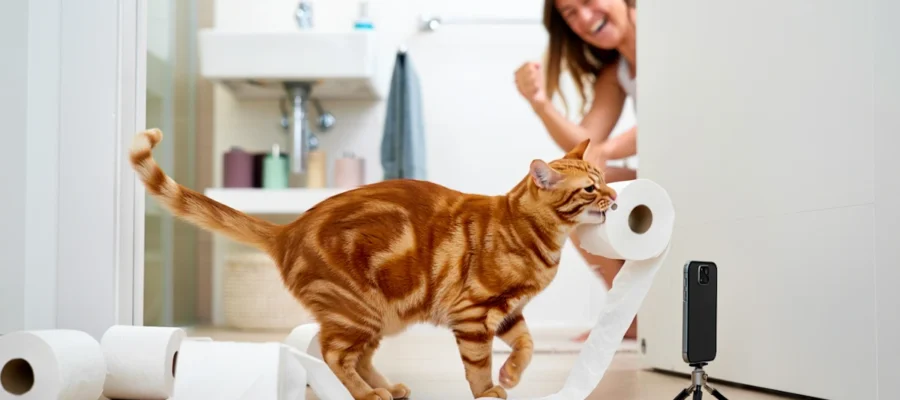
The smell of fresh litter mixed with the scent of digital success. That is exactly what hangs in Marc’s apartment these days, since his cat Whiskers unexpectedly became a social media star. Who would have guessed that teaching a feline to fetch toilet paper could turn a simple pet trick into a money-making machine?
Contrary to popular belief, pets can generate substantial income without being exploited. Marc discovered this almost by accident, and today brands are competing for the chance to work with his cat.
My own cat won’t even come when I call him, so I can only admire this story from a distance. After looking more closely at the phenomenon, I’m sharing what makes this success so interesting and why it is changing the way people think about influencer marketing.
In this article, you’ll see how an animal’s behavior can become a commercial opportunity, what happens behind the scenes of an unlikely partnership, and why this approach often performs better than conventional campaigns.
The problem: when traditional marketing loses its edge
Brands invest millions in advertising campaigns that struggle to hold attention. Consumers, overwhelmed by commercial messages, naturally become less responsive to standard marketing methods.
| Traditional method | Engagement rate | Average cost |
|---|---|---|
| TV advertising | 2-3% | 50 000€ |
| Human influencer | 1-5% | 10 000€ |
| Animal influencer | 15-25% | 500€ |
This level of ad fatigue pushes brands toward less conventional territory. Authenticity has become the holy grail of marketing, and what could feel more authentic than a cat simply doing its job without any obvious artifice?
The anecdote that changed everything
“Whiskers, fetch!” Marc calls from the kitchen. The tabby cat jumps off the sofa, runs down the hallway, and returns proudly with a roll of toilet paper in his mouth.
What looked like an ordinary domestic moment ended up changing their lives. Marc had originally trained his cat out of practicality—living in an apartment with an animal requires some organization. But when he uploaded the first video to TikTok, the reaction was immediate.
“I posted it for my friends,” Marc says. “The next morning, I had 2 million views and dozens of brands in my DMs.”
Marc’s mistake was underestimating the power of the unusual. His success is built on a raw kind of authenticity that communication agencies often struggle to recreate artificially.
The solution: how to monetize the unexpected
Marc developed a structured approach to turning this feline talent into a lasting business model. His strategy rests on three essential pillars.
Step 1: Document everything
Every interaction with Whiskers is filmed from multiple angles. Marc uses three smartphones to capture movement, expressions, and content that can be adapted for each social platform.
Step 2: Build a personality
Whiskers now has his own “character”: playful but obedient, greedy but disciplined. That narrative consistency keeps the audience engaged and makes brand collaborations easier to manage.
Step 3: Negotiate from a position of strength
With 5 million followers, the Marc-Whiskers team sets its own conditions: animal welfare must come first, campaigns need creative value, and compensation must be fair.
Did you know? Animal videos generate four times more engagement than human-led content on social media. The dopamine triggered by these images activates the same neurological circuits as food rewards.
Behind the scenes of an unlikely partnership
The paper goods brand Cottonelle was the first to recognize the opportunity. Its marketing director, Sophie Dubois, explains: “Whiskers perfectly reflects our values: practicality, softness, and family closeness.”
The contract signed between the two sides goes beyond usual industry standards. Whiskers receives 15% of the sales generated by his videos, plus a monthly fee of 3000€. Marc also handles image rights and negotiates filming conditions.
This collaboration produced a 23% increase in sales in the targeted segment in just three months. The media impact exceeded every initial forecast.
How can you assess your pet’s viral potential?
Watch for unique behaviors, test different video formats, and measure natural engagement before considering monetization. Spontaneity remains the secret ingredient behind this kind of success.
The secret optimization: beyond the buzz
Marc realized that keeping this success alive required a more thoughtful approach to influencer marketing. Rather than pushing Whiskers too hard, he focuses on preserving the quality of the relationship.
“My cat works no more than 20 minutes a day,” he says. “The rest of the time, he lives a normal life. That authenticity comes through in the content.”
This ethical approach attracts brands that share similar values. Whiskers now works with companies selling organic food, eco-friendly accessories, and even a startup that makes smart toys.
Key figure: 78% of consumers prefer brands that show a genuine concern for animal welfare, according to an Ipsos 2024 study.
Social media algorithms tend to favor this kind of content because it creates lasting positive emotions. Viewers unconsciously connect those feelings to the partner brands, building organic loyalty that money alone cannot buy.
When the exception becomes the rule
The story of Marc and Whiskers points to a deeper shift in the advertising landscape. Brands are discovering that authenticity often outperforms technical polish.
It also challenges the way we consume media. Why are we more receptive to a cat than to a professional model? The answer lies in our basic need for a genuine emotional connection.
Whiskers has helped open the door to a new generation of influencers. Dogs, parrots, and even tortoises now build their own commercial audiences. Animal influencer marketing is now estimated to be a 50 million euro market in France.
This quiet revolution is reshaping the rules of commercial communication. It shows that innovation often appears where people least expect it: in the authenticity of everyday life.
latest posts published
Pregnant Dog: How to Prepare for the Arrival of the Puppies?
Death and Inheritance Rights: Who Inherits Your Pet? What You Need to Know
Senior Dog Kibble: At What Age Should You Switch?

Which Dog Breeds Don’t Shed Hair?

Bringing Your Dog or Cat to the Casino: Is It Really Possible?

What Are the Most Beautiful Cat Breeds?

Why Does My Dog Close Its Eyes When I Pet Its Head?
How to Clean Your Cat’s Ears Without Stress

Sterilizing My Cat: The Real Pros and Cons