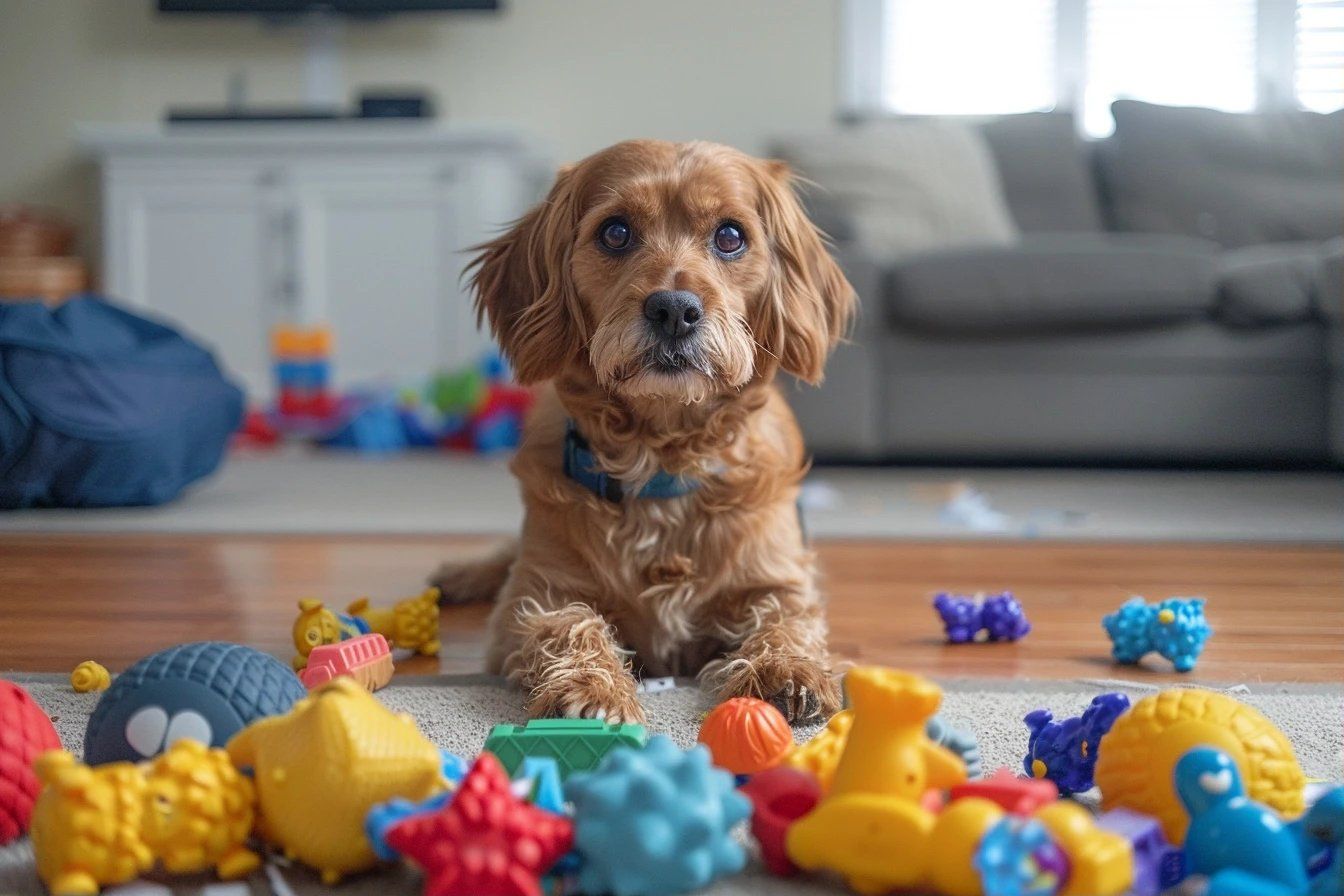
That morning, I found an unwelcome little surprise at the foot of my bed. My golden retriever, Caramel, was looking at me with those big innocent eyes, tail tucked low. After three years of perfect house training, why had he started slipping again? If you are dealing with the same frustrating problem, take a breath: there are real, practical ways to get your home clean again.
When an adult dog has accidents in the house, it is usually trying to tell you something. This is rarely about defiance or spite. More often, it points to discomfort, stress, or an underlying health issue that deserves a careful and compassionate look.
Understanding the main causes
Health problems should be ruled out first
Before looking for a behavioural explanation, a visit to the veterinarian should come first. Digestive upset, urinary tract infections, or intestinal parasites can all lead to sudden accidents indoors.
In Caramel’s case, the real issue was a mild gastritis. There was nothing obvious from the outside, but it was uncomfortable enough to disrupt his routine. Once he received treatment, everything returned to normal within a few days.
Stress and anxiety can undo house training
Dogs are remarkably sensitive to changes in their environment. A move to a new home, the arrival of a baby, noisy renovation work, or even a change in your schedule can be enough to trigger a setback.
Separation anxiety can also play a role. Some dogs eliminate indoors when they feel distressed, especially near their owner’s belongings. It is not a form of revenge; it is often a coping response to the fear of being left alone.
Changes in routine or territory matter more than many owners realise
Moving the food bowls, rearranging the living room, or introducing a new pet can unsettle a dog’s sense of security. Dogs thrive on predictability, and even a small disruption can lead to temporary confusion.
Did you know?
One dog in four experiences a temporary regression in house training during adult life. In most cases, this is a normal and temporary issue that improves within a few weeks when handled correctly.
Practical ways to restore house training
Go back to the basics of training
Even with an adult dog, a return to the fundamentals can make a big difference. Take your dog out at regular times, praise success enthusiastically, and avoid scolding after accidents. Punishment usually creates confusion or fear rather than progress.
When I started rewarding Caramel with treats after each successful outing, his attitude changed quickly. He began to understand what was expected again, and the accidents stopped almost immediately.
Clean accident spots thoroughly
Dogs are likely to return to the same place if traces of smell remain. That is why it is important to use an enzymatic cleaner designed to remove odours at the source.
Avoid bleach, which may actually encourage your dog to use the same spot again. A mix of white vinegar and hot water can also be helpful for cleaning many surfaces, as long as it is used appropriately for the material in question.
Adjust the environment
If accidents keep happening in one particular room, limit access to that area for a while or change how it is used. You can also place the dog’s water bowl or bed there, since dogs generally avoid soiling the place where they rest.
When it is time to call a professional
Some situations call for help from a dog trainer or a behaviour specialist. If the accidents continue despite your efforts, if your dog seems constantly tense, or if the problem is getting worse, it is wise to seek expert support.
An experienced professional can spot details that are easy to miss and build a plan adapted to your dog’s specific needs.
“Patience and consistency are a dog owner’s best allies. Every dog learns at its own pace, and that is part of what makes our companions so endearing.”
Restoring peace at home
House-training problems in adult dogs are rarely permanent. With patience, understanding, and the right approach, it is very possible to restore calm and cleanliness in your home.
Most importantly, remember that your dog is not doing this out of malice. It is communicating discomfort in the only way it knows how. By responding with kindness and paying attention to the signs, you will strengthen your bond as well as solve the problem.
latest posts published

Pregnant Dog: How to Prepare for the Arrival of the Puppies?
Death and Inheritance Rights: Who Inherits Your Pet? What You Need to Know
Senior Dog Kibble: At What Age Should You Switch?

Which Dog Breeds Don’t Shed Hair?

Bringing Your Dog or Cat to the Casino: Is It Really Possible?

What Are the Most Beautiful Cat Breeds?

Why Does My Dog Close Its Eyes When I Pet Its Head?
How to Clean Your Cat’s Ears Without Stress

Sterilizing My Cat: The Real Pros and Cons